

horse armor
- noun
- /hɔrs ˈɑrmər/
- The knight donned his horse armor before the battle, ensuring his mount was well protected.
Examples
-
They displayed an ancient set of horse armor at the museum.
-
The knight donned his horse armor before the battle.
-
The horse armor gleamed under the sunlight.
-
The knight proudly wore his horse armor into battle.
-
Did you see the horse armor at the museum?
-
They displayed an ancient set of horse armor at the museum, showcasing its intricate design and historical significance.
-
The horse armor gleamed under the sunlight, reflecting the craftsmanship of its creator.
Synonyms
 358
3.0
358
3.0

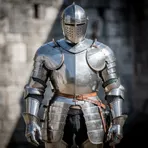
A strong metal covering worn in battle to protect the body
 31
4.1
31
4.1
Clothing made of strong material that protects the body from bullets and blows
 8
7.2
8
7.2
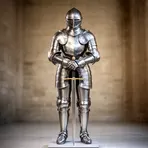
A full set of metal plates that cover the body and protect it in battle, often worn by knights
 1
4.2
1
4.2
Thick hard metal plates that protect vehicles or buildings from enemy fire

A piece of armor that covers a horse's head in battle

A piece of metal armor that covers a horse's head to protect it in battle

A metal plate that covers a horse's head in medieval battle or tournaments

A protective layer added to something to stop damage

A suit of armor that covers a soldier and often their horse, used by ancient soldiers on horseback
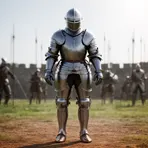
A complete suit of metal plates that covers the body and protects a knight in battle
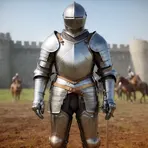
A suit of metal plates worn by knights for protection in battle

A protective shirt made of small metal rings linked together, worn by knights and soldiers
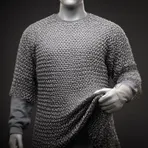
Flexible protective clothing made from small metal rings linked together
How Protective

Surface Forms
Morphology
The phrase literally composes as 'armor for a horse', so a B1 learner who knows 'horse' and 'armor' will infer a protective covering for a horse. However, the videogame-specific sense (a virtual, cosmetic item that changes appearance but gives no protection or stats) is a technical extension not predictable from the constituents, so the meaning is only partly transparent.
Etymology
Horse armor was the metal covering knights put on their horses in old battles and tournaments. The picture is simple: the armor acted like a metal coat over the horse to 'protect' it, so the name means a protective covering for a horse.