

aconite
 1
9.9
1
9.9

- noun
- /ˈækəˌnaɪt/
- Specialized
- The beautiful aconite, with its striking blue flowers, should be planted away from areas frequented by children.
- winter aconite
- aconite foliage
- blooms of aconite
Examples
-
"Some species of Aconite were well known to the ancients as deadly poisons.
Blog text (19) -
Aconite causes irregular action of the heart, and Belladonna produces delirium.
Blog text (19) -
Reading the above, you see pretty easily both how dangerous and how beneficial aconite can be.
Blog text (19) -
The ME found a scratch on the back of his hand with traces of aconite.
-
The value of Aconite as a medicine has been more fully realized in modern times, and it now ranks as one of our most useful drugs.
Blog text (19) -
Aconite is also supposed to have been the poison that formed the cup which Medea prepared for Theseus.
Blog text (19) -
History shows us that as far back as 1200 B.C., people in Egypt were aware of chemical extracts from plants that could kill bugs and used hemlock and aconite to kill insects that bothered them.
Blog text (15) -
It was said to be the invention of Hecate from the foam of Cerberus, and it was a species of Aconite that entered into the poison which the old men of the island of Ceos were condemned to drink when they became infirm and no longer of use to the state.
Blog text (19) -
The gardener warned that aconite is highly toxic and should not be ingested.
-
She carefully handled the aconite, knowing its poisonous nature could be dangerous.
Synonyms
 2
9.9
2
9.9
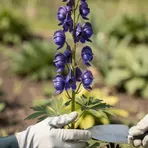
A poisonous plant with blue or purple flowers shaped like a hood


 1
9.9
1
9.9
A poisonous plant that lives for many years with yellow flowers and broad rounded leaves
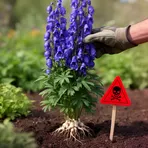
A poisonous garden plant with blue-purple hooded flowers whose leaves and roots are dangerous if eaten

A poisonous plant with hooded blue-purple flowers that grows in northern Europe

A poisonous plant with blue-purple hooded flowers

A poisonous plant with hood-shaped flowers that grows in cool Northern regions
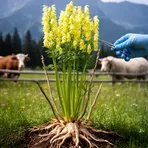
A poisonous plant that lives for many years with yellow flowers found in Europe and Asia
Compounds
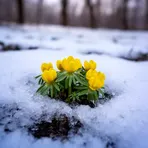
A small plant with bright yellow flowers that appear early in spring before the snow melts
Surface Forms
Etymology
Aconite comes from an old Greek name akoniton, and long ago people used the plant's 'poison' on arrow tips and other weapons. It is the same plant often called monkshood, and that history helps you remember that aconite is a very poisonous plant.