

wolfbane


 1
9.9
1
9.9
- noun
- /ˈwʊlfˌbeɪn/
- Many people admire the beauty of wolfbane flowers, but they should be careful, as they are highly poisonous.
Examples
-
Did I put in the wolfbane?
-
Books like Wolfbane they saw as very different, and I can't think of any good reason why they were wrong.
Blog text (9) -
Wolfbane.
-
Wolfbane.
-
Wolfbane?
-
Even a man who is pure at heart... and says his prayers by night... may become a wolf... when the wolfbane blooms... and the moon is full and bright.
-
I'm currently finishing a science fiction novel about a werewolf—no magic, no schlepping back and forth in the moonlight, no wolfbane.
Blog text (23) -
The herbalist warned that handling wolfbane without gloves could be dangerous due to its toxicity.
-
In ancient folklore, wolfbane was believed to have the power to ward off evil spirits.
Synonyms
 4
9.9
4
9.9
A poisonous plant whose touch or eating can make you sick
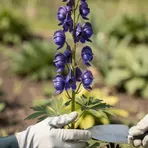 2
9.9
2
9.9
A poisonous plant with blue or purple flowers shaped like a hood
 1
9.9
1
9.9
A poisonous plant with thick roots and leaves like a hand, often with blue or white flowers
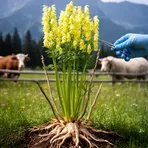
A poisonous plant that lives for many years with yellow flowers found in Europe and Asia

A poisonous plant with hood-shaped flowers that grows in cool Northern regions
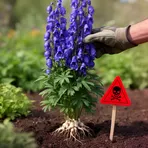
A poisonous garden plant with blue-purple hooded flowers whose leaves and roots are dangerous if eaten

A poisonous plant with hooded blue-purple flowers that grows in northern Europe
Surface Forms
Morphology
Etymology
The word wolfbane comes from the old English parts wolf and bane, where bane means 'killer' or 'cause of death'. People believed this poisonous plant could kill or drive away wolves, so the name stuck and today wolfbane means a toxic plant, also called aconite or 'monkshood'.