

Aconitum
- noun
- /ˌækəˈnaɪtəm/
- Specialized
- Gardeners should be cautious when planting Aconitum, as it is poisonous to both humans and pets.
Examples
-
Aconitum is known for its distinctive Aconitum hood-shaped flowers and can be highly toxic if ingested.
-
Aconitum di lycotonum.
-
The herbalist recommended Aconitum for its medicinal properties, but warned that it must be used with care due to its toxicity.
Synonyms

 4
9.9
4
9.9

A poisonous plant whose touch or eating can make you sick
 2
9.9
2
9.9
A poisonous plant with blue or purple flowers shaped like a hood
 1
9.9
1
9.9
A poisonous plant with thick roots and leaves like a hand, often with blue or white flowers


 1
9.9
1
9.9
A poisonous plant that lives for many years with yellow flowers and broad rounded leaves

A poisonous plant with hooded blue-purple flowers that grows in northern Europe

A poisonous plant with blue-purple hooded flowers
Compounds
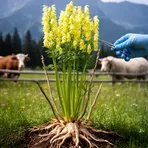
- Specialized
A poisonous plant that lives for many years with yellow flowers found in Europe and Asia
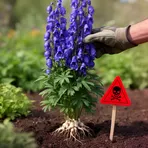
- Specialized
A poisonous garden plant with blue-purple hooded flowers whose leaves and roots are dangerous if eaten
Surface Forms
Etymology
Aconitum comes from an old Greek name akoniton, and many people link that to akon meaning 'dart' or 'arrow'. A helpful way to remember the word is that the plant was used to make 'poison' for arrows, so the name fits its deadly nature.