

helmetflower
- noun
- UK
- Many gardeners avoid planting helmetflower because of its highly toxic properties.
Examples
-
The vibrant blue hooded petals make helmetflower easy to recognize during walks in the countryside.
-
Caution is required when handling helmetflower, as all parts of the plant contain dangerous alkaloids.
-
Wow! Look at that beautiful helmetflower!
-
The helmetflower is known for its striking blue-purple blooms.
-
Gardeners should be cautious around the helmetflower, as it can be poisonous if ingested.
-
The lovely helmetflower blooms in late summer, attracting butterflies while posing a risk to pets.
-
In appearance, the helmetflower stands out with its unique blue-purple flowers, but it is essential to remember that it is toxic.
Synonyms
 2
9.9
2
9.9

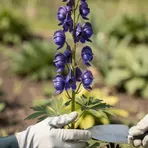
A poisonous plant with blue or purple flowers shaped like a hood
 1
9.9
1
9.9
A poisonous plant with thick roots and leaves like a hand, often with blue or white flowers


 1
9.9
1
9.9
A poisonous plant that lives for many years with yellow flowers and broad rounded leaves

A poisonous plant with hooded blue-purple flowers that grows in northern Europe
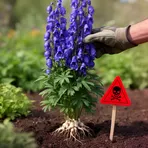
A poisonous garden plant with blue-purple hooded flowers whose leaves and roots are dangerous if eaten
Surface Forms
Morphology
Etymology
Helmetflower comes from the hooded, helmet-like shape of the blue-purple blooms, so it is helmet + flower. That hooded image helps you remember this plant, also called 'monkshood', which is known to be poisonous.