

abrasive
 6
4.8
6
4.8

- adjective
- /əˈbreɪsɪv/
- The water and abrasive mixture cut materials with an accuracy of 0.005 inches.
- abrasive blasting
- abrasive slurry
- abrasive particles
Loading YouTube…
Watch on YouTubeVolcanic ash is really rough and abrasive.
- Volcanic ash is really rough and abrasive.
Examples
-
So she said that one was more moisturizing and less abrasive, but it still is an exfoliating bar.
-
In the free abrasive process, the abrasive particles are applied in slurry form.
Academic text (1996) -
Anything abrasive like this will really get rid of those dead cells.
-
Rough edges left from the cutting operations can be removed with abrasive paper.
Academic text (2007) -
Hardened flight edges should be used to resist the abrasive action of the grit.
Academic text (2001) -
Moreover, fields of gritty, abrasive black volcanic ash are uncomfortable places to live.
Academic text (2004) -
As the engine starts and the blades rotate, the abrasive grit cuts shallow grooves into the case.
Academic text (1995) -
Excessive dental wear is caused by the fine, abrasive ash that blankets everything after a pyroclastic eruption.
Academic text (2003) -
The all-purpose cleansing powder has naturally abrasive minerals that cut grease and add shine without scratching surfaces.
-
A natural bristle brush is less abrasive than one with synthetic bristles.
Synonyms
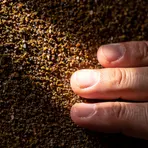 12
4.1
12
4.1
Has a rough texture with small hard grains
 8
3.2
8
3.2
Rough on the skin and slightly irritating
 1
9.9
1
9.9
Rough to the touch with many small bumps or scales

Feels rough and slightly scratchy when you touch it
Antonyms

Compounds

- Specialized
A hard thing like sandpaper or diamond that wears down and smooths surfaces
How Abrasive

Surface Forms
Morphology
Etymology
Abrasive comes from the same root as abrade, which means 'to scrape' or 'wear away'. So an abrasive material literally 'scrapes' a surface to remove or smooth parts.