
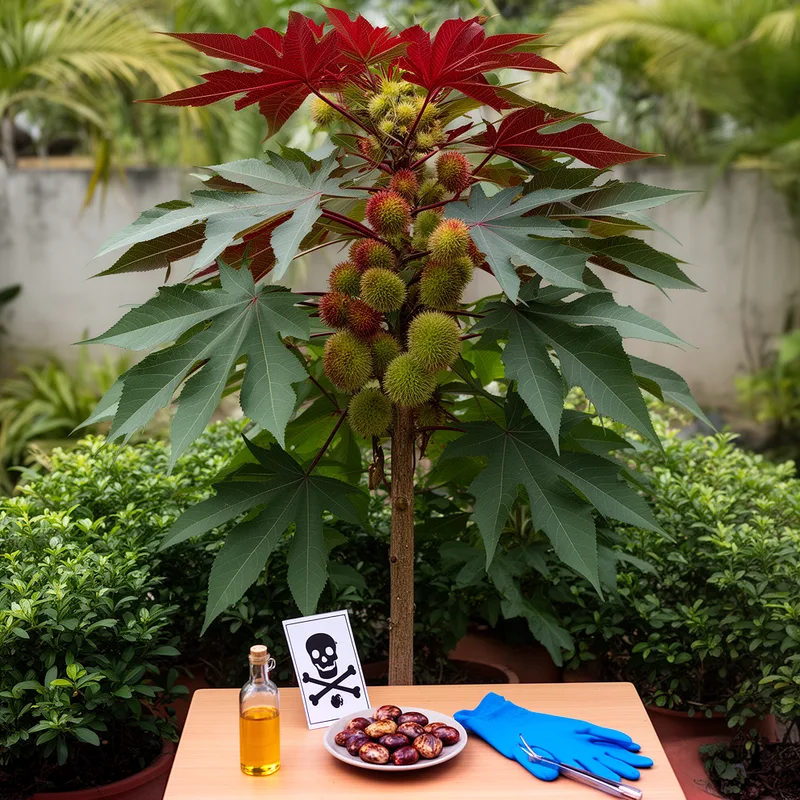
Ricinus communis


 1
8.6
1
8.6
- noun
- /ˈrɪsɪnəs kəˈmjuːnɪs/
- Specialized
 :
ricino común
:
ricino común
- In gardens, Ricinus communis is often admired for its dramatic foliage and large seed pods.
Examples
-
I found that Ricinus communis produced lots of seeds very easily that germinated quickly.
Blog text (15) -
The seeds of the Ricinus communis plant are used to produce castor oil, which has many applications.
-
Farmers grow Ricinus communis for its seeds, which can be harvested and processed into oil.
Synonyms
 5
5.5
5
5.5
A tropical plant with large leaves whose seeds are used to make oil and medicine
 1
9.9
1
9.9
A group of plants that includes the castor bean whose seeds make castor oil and are poisonous

A large tropical bush with wide leaves that has seeds used for castor oil and contains a poison called ricin

A large tropical shrub with big hand-shaped leaves and spiny seed pods that give seeds used to make castor oil

A large tropical shrub with palm-like leaves grown for seeds that make castor oil and are poisonous
Surface Forms
Morphology
Ricinus + communis
This is a Linnaean binomial: 'Ricinus' names the plant genus and 'communis' (Latin for 'common') signals the common species, so a learner who knows both elements could infer it refers to the common species of the Ricinus plant (i.e., a plant). However, the detailed sense — that it is the castor oil plant, a tall tropical shrub with seeds producing castor oil and the toxin ricin — is not derivable from the parts, and the species epithet is Latin rather than a familiar English word, so the transparency is only partial.
Etymology
Ricinus communis comes from Latin names. The word Ricinus meant a 'tick' because each shiny seed looks like a small tick, and communis means 'common', so the name describes the 'common tick' plant, the castor oil plant known for its seeds.