

castor-oil plant
- noun
- /ˈkæstərˌɔɪl plænt/
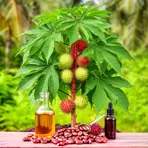
- Farmers cultivate the castor-oil plant to harvest its seeds, which are used to produce oil.
Examples
-
Only the castor oil plant would bloom before her eyes with bright purple flowers, produce its fruit, and let it drop to the ground.
Fiction book (1998) -
The castor-oil plant thrives in warm climates, showcasing its large, palmate leaves.
-
With its towering height, the castor-oil plant adds a striking visual element to the garden.
Synonyms
 5
5.5
5
5.5

A tropical plant with large leaves whose seeds are used to make oil and medicine


 1
8.6
1
8.6
A tall tropical plant with big leaves and spiny seed pods whose seeds make castor oil and are very poisonous

A large tropical shrub with palm-like leaves grown for seeds that make castor oil and are poisonous

A large tropical shrub with big hand-shaped leaves and spiny seed pods that give seeds used to make castor oil
Surface Forms
Morphology
castor-oil + plant
The meaning 'a plant that produces castor oil' is directly and transparently derived from combining 'castor-oil' (the oil or source) with 'plant' (a living botanical organism). This follows a regular noun+noun compounding pattern (source/product plant) common across languages, so a B1 learner who knows both constituents can infer the MWE's meaning.
Etymology
Castor-oil plant is named for the oil its seeds make, called castor oil. One popular story says that oil name may come from an old beaver product called 'castoreum', because people long ago used the plant oil like beaver oil, so the plant's name points to the oil and the seeds that produce it.