

palma christi
- noun
- Specialized
- Care should be taken when handling palma christi seeds, as they contain a potent toxin.
Examples
-
The seeds of the palma christi are processed to make castor oil.
-
The palma christi plant is known for its large, palmate leaves.
-
Farmers in the region grow palma christi for its valuable oil and medicinal uses.
-
Farmers in Africa often cultivate palma christi for its oil.
-
Farmers in the region grow palma christi for its valuable oil and medicinal uses.
-
The seeds of the palma christi are processed to make castor oil.
-
The palma christi plant is known for its large, palmate leaves.
Synonyms
 5
5.5
5
5.5

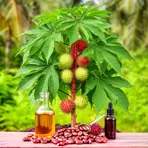
A tropical plant with large leaves whose seeds are used to make oil and medicine


 1
8.6
1
8.6
A tall tropical plant with big leaves and spiny seed pods whose seeds make castor oil and are very poisonous

A large tropical bush with wide leaves that has seeds used for castor oil and contains a poison called ricin

A large tropical shrub with big hand-shaped leaves and spiny seed pods that give seeds used to make castor oil
Surface Forms
Morphology
palma + christi
The constituents are Latin forms not found in the learner dictionary, so a B1 learner who knows English vocabulary would not be able to compositionally derive the botanical meaning. Even if a learner recognized 'palma' (palm) and 'christi' (Christ/’of Christ’), that literal reading does not predict the specialised sense 'castor oil plant', making the expression idiomatic/lexicalized rather than transparently compositional.
Etymology
Palma christi, with palma meaning 'palm' and christi meaning 'Christ', comes from Latin because the plant's large, hand-shaped leaves looked like a palm. People used its seeds to make castor oil for 'healing', so the name linked the plant's hand-like look to a healing hand, and today palma christi is the shrub grown for its seeds that make 'castor oil'.