

Rhinoceros
- noun
- /raɪˈnɑsərəs/
- Specialized
- The Indian rhinoceros is easily identifiable by its single horn and large folds of skin.
Loading YouTube…
Watch on YouTubeAnd what is our greatest 'cause now, and I've just got back from Java, is the Javan rhinoceros.
- And what is our greatest 'cause now, and I've just got back from Java, is the Javan rhinoceros.
- I don't know, but that's in my experience when I look at who succeeds, they've got this rhinoceros hide and they persist.
- They had all the rhinoceros, giraffes, everything, everything could have.
- I was looking at this cute picture of mommy rhinoceros with it's it's child, you know, and why did we humans drive it to extinction?
Examples
-
I mean, a rhinoceros is a herbivore and we know that they showed herb, they showed rhinoceroses, but they were really big time.
-
Because right now, most of the unicorns are just rhinoceroses in disguise.
-
You said a white rhinoceros in Second, what is an old Spanish trail?
-
I was looking at this cute picture of mommy rhinoceros with it's it's child, you know, and why did we humans drive it to extinction?
-
They had all the rhinoceros, giraffes, everything, everything could have.
-
I don't know, but that's in my experience when I look at who succeeds, they've got this rhinoceros hide and they persist.
-
The rhinoceros can weigh over a ton and is known for its impressive horn.
-
In many African reserves, the rhinoceros is under constant protection from poachers.
Synonyms
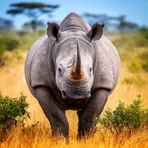
 67
1.0
67
1.0

A large heavy animal that eats plants and has very thick skin and one or two horns on its nose
Compounds
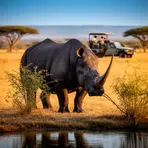
- South African

 1
6.7
1
6.7
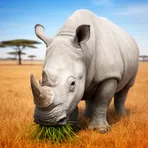
A large African rhinoceros that has two horns and a pointed upper lip and is now very rare
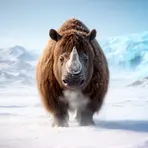 1
8.6
1
8.6
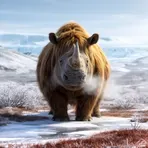
A large rhinoceros with thick hair that lived in cold places during the Ice Age

- Indian
A large wild animal with one horn and thick folded skin that lives in India and Nepal
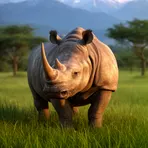
- Specialized
A large heavy animal with one horn that lives in India and Nepal
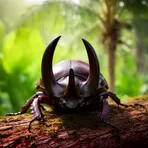
- Specialized
A large extinct rhinoceros with thick fur that lived in Arctic regions during the Ice Age
- South African
A very large light grey African animal with two horns that eats grass
Surface Forms
Morphology
Rhinoceros = rhino + ceros
Although historically analyzable as Greek combining forms meaning 'nose' + 'horn', the parts are not productive or familiar standalone English morphemes for most learners, so the meaning is not derivable from the components.
Etymology
Rhinoceros comes from Greek parts rhino- 'nose' and -ceros 'horn'. So it means 'nose-horn', which helps you remember it as the large animal with a horn on its nose.