
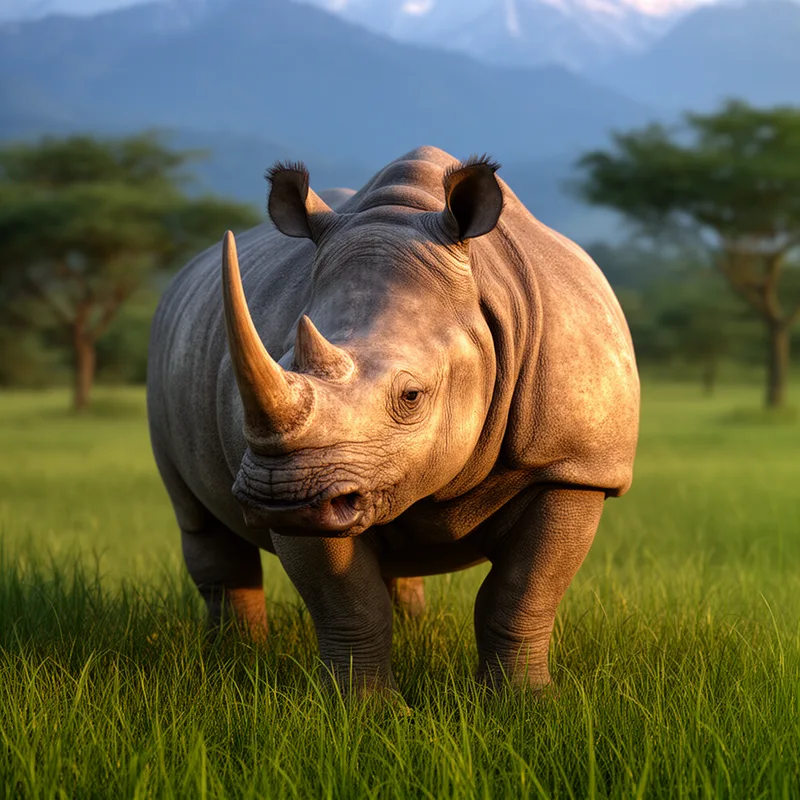
Rhinoceros unicornis
- noun
- Specialized
- The unique single horn distinguishes Rhinoceros unicornis from other rhinoceros species.
Examples
-
The Rhinoceros unicornis is primarily found in the grasslands of northern India and Nepal.
-
Did you know that the Rhinoceros unicornis can weigh over 2,200 kilograms?
-
Conservation efforts have helped increase the population of Rhinoceros unicornis in recent decades.
-
The Rhinoceros unicornis is often found in grasslands and forests.
-
Conservation efforts have helped increase the population of Rhinoceros unicornis in recent decades.
-
The Rhinoceros unicornis is primarily found in the grasslands of northern India and Nepal.
-
The unique single horn distinguishes Rhinoceros unicornis from other rhinoceros species.
Synonyms

A large wild animal with one horn and thick folded skin that lives in India and Nepal
Surface Forms
Morphology
Rhinoceros + unicornis
The phrase is compositionally literal — it names a rhinoceros species and the Latin element 'unicornis' encodes 'one-horned', so the overall meaning (an Indian/one‑horned rhinoceros) is derivable from the parts. However, 'unicornis' is a Latin taxonomic epithet rather than a common English word, so a typical B1 learner would not automatically recognize that element without knowledge of roots or Latin; this makes the transparency only partial.
Etymology
Rhinoceros unicornis comes from old Greek and Latin words that describe the animal's look. Rhinoceros is made of words for 'nose' and 'horn', and unicornis means 'one horn'. Imagine a big animal with a single horn on its nose, so the name points to that clear feature.

