
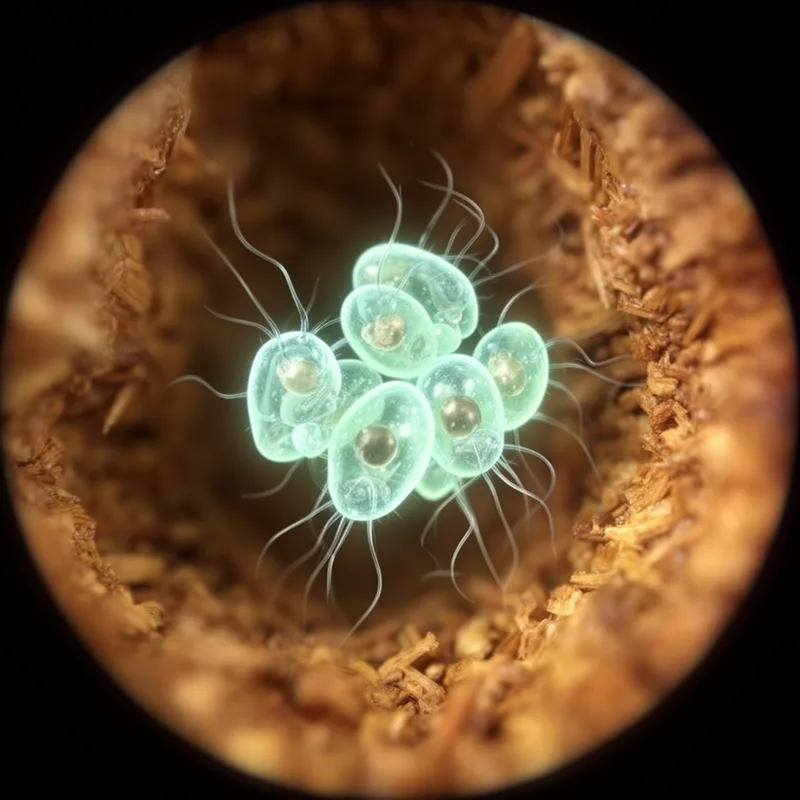
Polymastigina
- noun
- Specialized
- Most members of Polymastigina are known for their parasitic lifestyles in different host organisms.
Examples
-
Under the microscope, researchers observed several Polymastigina moving rapidly.
-
The gut of some termites contains Polymastigina that assist in digesting wood.
-
The Polymastigina are fascinating organisms.
-
Many Polymastiginas can be found in aquatic environments.
-
Many species of Polymastigina live as parasites in the intestines of fish.
-
Researchers identified numerous types of Polymastigina in the samples collected from river water.
-
The presence of Polymastigina in a host can affect the host's overall health.
Synonyms
 1
8.6
1
8.6

Tiny living things made of one cell, like amoebas, that usually live in water or inside other animals
 1
9.9
1
9.9
A tiny living thing made of one cell that moves with whip-like tails
A tiny single-celled creature with many long tail-like parts it uses to move
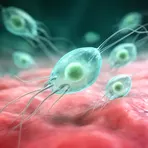
Very small single-celled animals with tail-like parts that live as parasites in animals and people
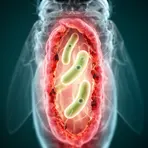
A single-celled organism that lives in insects and can harm them

A very small living thing that lives on fish skin and causes disease

A single-celled organism that moves using whiplike tails and sometimes causes disease in people
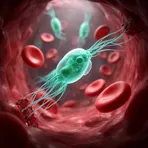
A single-celled animal that has whip-like tails and can cause disease in people or animals

Single-celled living things that move using one or more whip-like tails

A one-celled organism that moves with whip-like tails and can cause disease in animals or people
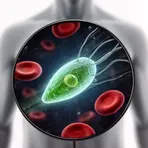
A single-cell creature that moves with tail-like parts and can cause disease in people
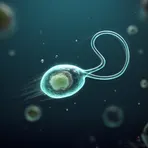
A cell with one or more long tails it uses to move

One-celled living things that move using one or more whip-like tails
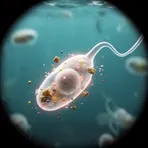
A tiny single-celled animal-like creature that swims with a tail-like part and absorbs food
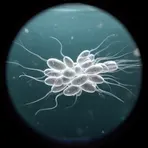
An old biology group of tiny animal-like cells that move with thin tails
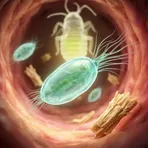
A tiny single-celled animal with tail-like parts that lives in termite intestines
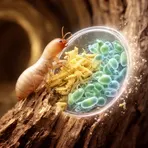
Small living things that help insects break down wood inside their bodies

A group of tiny one-celled animals with many tails that live in insect guts and help digest wood
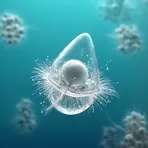
A single-celled water organism with a collar of tiny moving hairs used to catch food and closely related to animals

A single-celled living thing usually too small to see without a microscope
Surface Forms
Morphology
Polymastigina = mastigina (semi-transparent) = poly + mastig + ina
The form is built with the learned prefix 'poly-' meaning 'many' and the combining form 'mastig-' meaning 'whip' or 'flagellum', so the overall sense is fairly direct but specialized.
Etymology
Polymastigina comes from the parts poly- 'many' and mastig- 'whip', and poly- is the same 'many' you see in polygon. So the name helps you remember that these tiny, often parasitic, single-celled creatures move with many 'whip-like' tails, which is why they are called a group of organisms with flagella.