
Hypermastigina
- noun
- Specialized
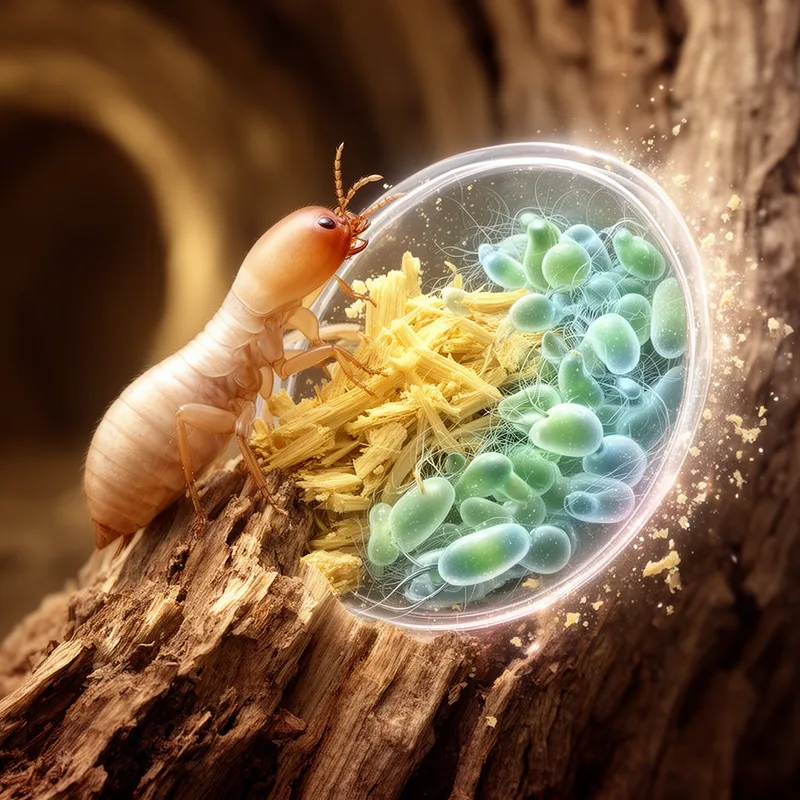
- Some termites rely on Hypermastigina in their digestive tracts to break down cellulose from wood.
Examples
-
The symbiotic relationship between Hypermastigina and wood-eating insects is essential for the insects’ survival.
-
The Hypermastigina play a crucial role in the digestion of cellulose.
-
Researchers observed that Hypermastigina can efficiently convert plant fibers into usable nutrients for their hosts.
-
Many Hypermastiginas thrive in the intestines of termites.
-
Some termites rely on Hypermastigina in their digestive tracts to break down cellulose from wood.
-
Researchers observed that Hypermastigina can efficiently convert plant fibers into usable nutrients for their hosts.
-
Many Hypermastigina thrive in the intestines of termites.
Synonyms

A group of tiny one-celled animals with many tails that live in insect guts and help digest wood
Compounds
- Specialized
A group of tiny one-celled animals with many tails that live in insect guts and help digest wood
Surface Forms
Morphology
Hypermastigina = mastigina (opaque) = hyper + mastig + ina
The word is a technical taxonomic formation built on the classical combining form mastig- and the prefix hyper-, so its meaning is not readily recoverable for most learners.
Etymology
The word Hypermastigina breaks into Greek parts hyper- meaning 'very' or 'over', mastig- meaning 'whip' or 'long tail', and the ending -ina which names a 'group'. So Hypermastigina are tiny creatures with many whip-like tails, and that name fits because these tails help them move and break down wood inside insects.

