
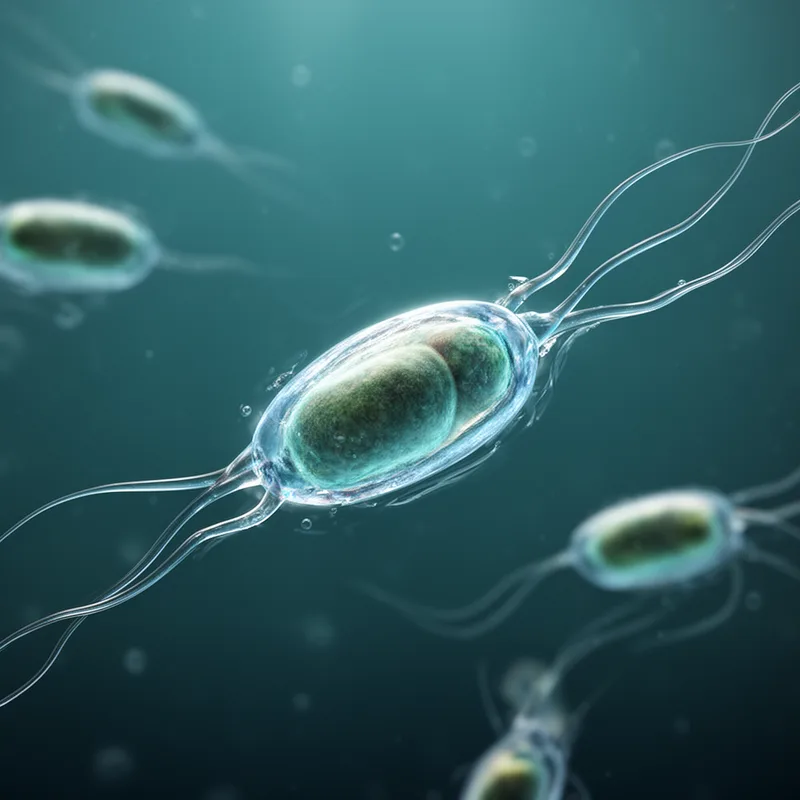
Flagellata
- noun
- Specialized
- Many species within the Flagellata use their flagella to propel themselves through water.
Examples
-
The classification of Flagellata has changed as scientists learn more about protozoan diversity.
-
Researchers observed several Flagellata under the microscope during the biology lab session.
-
Many species within the Flagellata use their flagella to propel themselves through water.
-
The Flagellata are known for their unique movement.
-
Many Flagellatas can be found in freshwater environments.
-
Researchers observed several Flagellata under the microscope during the biology lab session.
-
The classification of Flagellata has changed as scientists learn more about protozoan diversity.
Synonyms

Single-celled living things that move using one or more whip-like tails
A group of tiny single-celled organisms with tail-like flagella that often live as parasites

A group of tiny one-celled animals with many tails that live in insect guts and help digest wood
An old biology group of tiny animal-like cells that move with thin tails
Surface Forms
Etymology
Flagellata comes from the Latin flagellum, which means 'whip'. These tiny single-celled organisms move with flagella, or 'whip-like' tails, so the name points to the way they swim.

