

Old Church Slavic
- noun
- Literature
- The Gospels were first translated into Old Church Slavic for the use of early Slavic Christians.
Examples
-
The Cyrillic script was originally developed to write Old Church Slavic.
-
The Old Church Slavic language influenced many modern Slavic languages.
-
Linguists study Old Church Slavic to understand the evolution of Slavic languages.
-
Many scholars study Old Church Slavic to understand Slavic history.
-
Linguists study Old Church Slavic to understand the evolution of Slavic languages.
-
The Gospels were first translated into Old Church Slavic for the use of early Slavic Christians.
-
The Cyrillic script was originally developed to write Old Church Slavic.
Synonyms

An early Slavic language used in the ninth century to translate the Bible and other church texts

A first Slavic written language used to translate the Bible and church texts in the Middle Ages
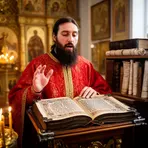
A literary Slavic language that Orthodox churches use for worship and Bible translation

A Slavic language used in Orthodox church services, based on Old Church Slavonic from the 9th century
Surface Forms
Morphology
The phrase combines easily interpretable parts: 'old' (earlier/historical), 'church' (Christian institutional/textual context), and 'Slavic' (relating to Slavic languages), so its overall meaning as an earlier/formal Slavic language used in church contexts is directly inferable. Although it is a technical/historical label, the composition follows transparent, cross-linguistic naming patterns (e.g. Old English, Church Latin), so a B1 learner who knows the constituents will grasp the general sense.
Etymology
The noun Old Church Slavic literally names an Old Church Slavic language made for use in the Christian church. Long ago, missionaries translated the Bible into local Slavic speech so people could read religious texts, and that's why the name now means the 'earliest recorded Slavic written language'.

