

Old Church Slavonic
- noun
- Literature
- The first translation of the Bible into Old Church Slavonic was completed by Saints Cyril and Methodius.
Examples
-
Many manuscripts in Old Church Slavonic have been preserved in monasteries.
-
Linguists study Old Church Slavonic to understand the early development of Slavic languages.
-
The first translation of the Bible into Old Church Slavonic was completed by Saints Cyril and Methodius.
-
Many scholars study Old Church Slavonic for its historical significance.
-
Did you know that Old Church Slavonic was used in the 9th century?
-
Linguists study Old Church Slavonic to understand the early development of Slavic languages.
-
Many manuscripts in Old Church Slavonic have been preserved in monasteries.
Synonyms

An old written Slavic language used to translate the Bible for early Christians in the ninth century

A first Slavic written language used to translate the Bible and church texts in the Middle Ages

A very old Slavic language used in the 9th–11th centuries for early Bible translations
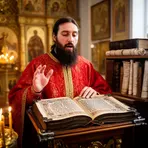
A literary Slavic language that Orthodox churches use for worship and Bible translation

A Slavic language used in Orthodox church services, based on Old Church Slavonic from the 9th century
Surface Forms
Morphology
The term is compositionally built from 'old' (earlier historical stage) + 'church' (liturgical/religious) + 'Slavonic' (a Slavic language group), so a learner who knows the parts can infer it refers to an earlier liturgical Slavic language. This follows a common cross-linguistic naming pattern for historical languages (e.g. 'Old English'), making the meaning predictable to B1 learners.
Etymology
Old Church Slavonic is called that because it was the old Slavic language used in the church for religious books. Saints Cyril and Methodius made an alphabet and used it 'to translate' the Bible into Slavic, so the name reminds us it was the first written Slavic language for church use.

