

Slavic
 12
6.1
12
6.1

- adjective
- /ˈslævɪk/
- Yet Congress passed a law mandating the Slavic Legion in July 1918.
- Slavic languages
- Slavic people
- Slavic characters
Loading YouTube…
Watch on YouTubeHer partner to start that process was ironically dominantly Slavic, the USSR.
- Her partner to start that process was ironically dominantly Slavic, the USSR.
- Is the Balkans and Anatolia, some Armenian, some Slavic elements.
- It doesn't have to do with Jews or Slavic people.
- What we also need are the other Slavic states.
- They change their own names that their name sounds Slavic, right?
- She says, personally, I do not believe any hysterical talk of world inundation by any people, Slavic or Chinese or Japanese.
- It talks about, you know, securing living room in the the East by taking over these Slavic countries and doing terrible things to them.
- You know, Serbian, these are Slavic languages.
- Chetniks was there are, you know, like Slavic, No different from Russians.
- They give like grooming tips, Stubble helps and Slavic fat pads.
- They used to do that in a lot of the Slavic wars, a lot of where is that?
Examples
-
Croatians are Catholic, Serbians are Orthodox, and Muslims are Slavic people converted to Islam.
Academic text (1997) -
Both Czech and Polish patriots saw the benefits of Slavic unity in their reaction to Germany.
Academic text (1996) -
All right, It's a rare example of a base Slavic word coming into our language, right?
-
- Is that a Slavic name?
-
After that, the committee changed its name to the United Committee of South Slavic Americans.
Academic text (1996) -
These are Slavic Orthodox peoples.
-
The word vampire originated from a Slavic myth.
-
The area that is now Yugoslavia was settled by the migration of Slavic tribes during the sixth century.
Academic text (1997) -
Along the Deneepa's banks stood Kiev, the cultural heart of the eastern Slavic world, the mother of cities, an opulent memory of a golden age long past.
-
Diana has red-gold hair, a deep voice, and distinct Slavic features that reflect her heritage.
Synonyms
 1
5.6
1
5.6
About the people, languages, and culture of eastern Europe and Russia
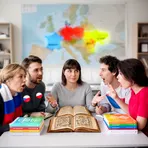 1
7.4
1
7.4
Relating to languages like Russian, Polish and Czech or to the people who speak them
Compounds
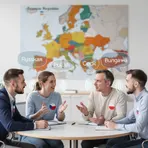


 1
4.4
1
4.4
People who speak languages like Russian, Polish or Bulgarian, mainly in Eastern Europe and the Balkans
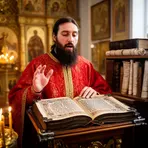
- Literature
A literary Slavic language that Orthodox churches use for worship and Bible translation

- Literature
A Slavic language used in Orthodox church services, based on Old Church Slavonic from the 9th century
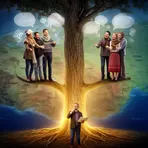
- Specialized
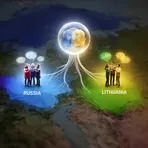
A group of languages that includes Slavic ones like Russian and Baltic ones like Lithuanian
- Specialized
A group of related languages that includes Russian and Lithuanian

- Literature
An old written Slavic language used to translate the Bible for early Christians in the ninth century
Surface Forms
Morphology
Etymology
Slavic comes from the name Slav, which probably comes from the old Slavic word slovo meaning 'word', so it first named people who 'speak the same words'. That's why Slavic now describes the peoples and traditions connected by those languages.