
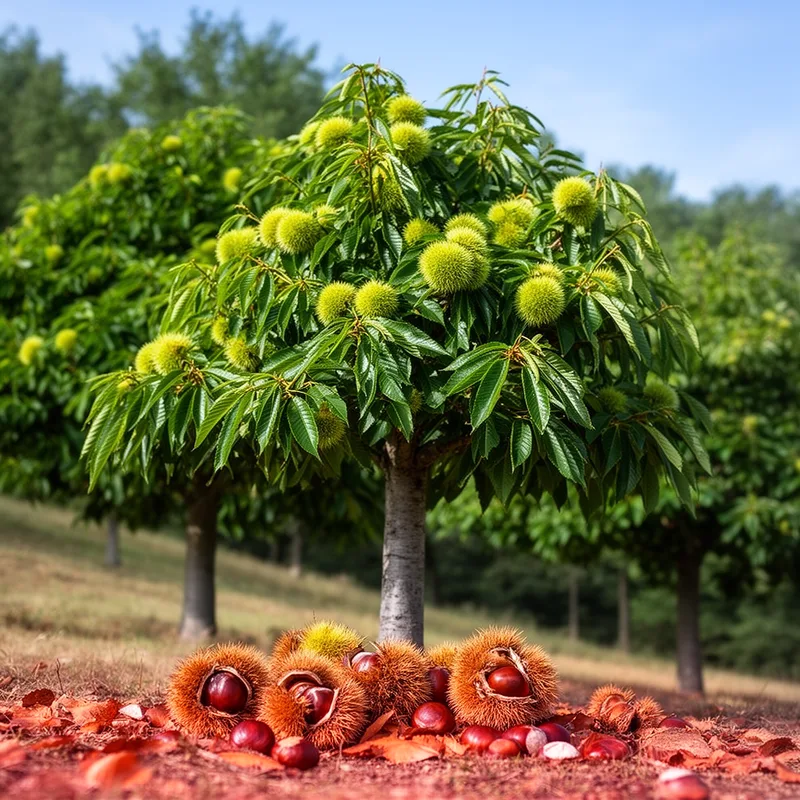
Castanea
- noun
- /kæˈsteɪniə/
- Specialized
- The American chestnut, once dominant in eastern forests, belongs to the Castanea genus.
Examples
-
The American chestnut, a member of the Castanea genus, was once a common tree in North America's forests.
-
Botanists studied the genetic diversity of Castanea after a fungal blight decimated populations.
-
Several species within the genus Castanea are valued for their edible nuts.
-
The Castanea trees are known for their beautiful foliage.
-
Did you see the Castanea in the park?
-
Several species within the genus Castanea produce edible nuts that are enjoyed in various culinary dishes.
-
Botanists studied the ecological role of Castanea trees in supporting local wildlife and improving soil health.
Compounds
- Specialized
A small evergreen tree from the Pacific coast of North America with shiny yellow-green leaves and edible nuts


- Specialized
A large tree that loses its leaves each year, native to eastern North America and known as the American chestnut

- Specialized
A chestnut tree from China and Korea that makes sweet nuts you can eat
- Specialized
A small tree from the Ozark Mountains with larger leaves than the Allegheny chinkapin

- Specialized
A small chestnut shrub that produces edible nuts in the southeastern United States
Surface Forms
Etymology
Castanea as a tree name comes from Latin castanea, meaning 'chestnut', from Greek kastanon. That is why the word is used for the trees (and their nuts) we call chestnuts and chinkapins.

