

wild crocus
- noun
- /waɪld ˈkroʊkəs/
- UK
- In early spring, clusters of wild crocus appear on the hillsides, adding color to the melting snow.
Examples
-
The wild crocus is a hardy plant that thrives in the prairies of North America.
-
Photographers travel each year to Siberia to capture the beauty of the blooming wild crocus.
-
Look at that stunning wild crocus blooming near the trail!
-
The wild crocus blooms in early spring.
-
In early spring, clusters of wild crocus appear on the hillsides, adding color to the melting snow.
-
Photographers travel each year to Siberia to capture the beauty of the blooming wild crocus.
-
The wild crocus is a hardy plant that thrives in the prairies of North America.
Synonyms

A short hairy plant from North America and Siberia with blue-violet spring flowers
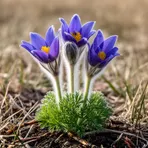
A short hairy plant that comes back each year with blue-violet spring flowers

A short, hairy plant from North America that lives more than one year and has blue-violet spring flowers

A short hairy plant with blue-violet or lilac flowers in early spring

A short, hairy plant that comes back every year and has blue-violet or lilac flowers in early spring
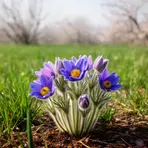
A short hairy plant with blue-violet or lilac flowers that blooms in early spring

A short hairy plant with blue-violet or lilac flowers in early spring

A small plant with blue-violet or lilac flowers that blooms in early spring
Surface Forms
Morphology
The meaning 'a crocus growing in the wild/not cultivated' is directly and compositionally derived from 'wild' (living naturally) + 'crocus' (a flowering plant). This straightforward adjective + noun pattern is cross-linguistically common, so a B1 learner who knows both constituents would readily infer the intended meaning.
Etymology
Wild crocus gets its name from the simple picture of a little crocus flower growing by itself in fields or on hills; wild means 'not planted' and these flowers often push up through the melting snow in 'early spring', so the name describes a small, hardy plant that grows naturally.

