

prairie anemone
- noun
- /ˈprɛəri ˌænəˈmoʊni/
- US
- The prairie anemone thrives in well-drained soil across the plains of North America.
Examples
-
Gardeners value the prairie anemone for its hardiness and early spring blossoms.
-
In the wild meadow, the prairie anemone added a splash of violet among the green grasses.
-
The prairie anemone is a beautiful flower.
-
I saw a prairie anemone blooming in the field.
-
Gardeners value the prairie anemone for its hardiness and early spring blossoms.
-
In the wild meadow, the prairie anemone added a splash of violet among the green grasses.
-
The prairie anemone thrives in well-drained soil across the plains of North America.
Synonyms

A short hairy plant from North America and Siberia with blue-violet spring flowers
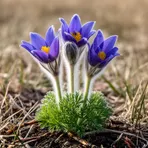
A short hairy plant that comes back each year with blue-violet spring flowers

A short, hairy plant from North America that lives more than one year and has blue-violet spring flowers

A short hairy plant with blue-violet or lilac flowers in early spring

A small wild plant with purple flowers in early spring

A small plant with blue-violet or lilac flowers that blooms in early spring

A short, hairy plant that comes back every year and has blue-violet or lilac flowers in early spring

A short hairy plant with blue-violet or lilac flowers in early spring
Surface Forms
Morphology
The phrase denotes an anemone associated with prairies, so its meaning is directly derivable from combining 'prairie' (grassland) and 'anemone' (a spring-blooming plant). This noun–noun compositional pattern is transparent and cross-linguistically common, so a B1 learner who knows both words will readily infer the MWE's meaning.
Etymology
Prairie anemone is a simple picture: prairie means open grassland and anemone comes from a word for 'wind' and was called a 'windflower'. Imagine a small violet flower nodding in the wind across the plains, and that's why the name means a low, tough spring flower of the prairie.

