

Pulsatilla patens
- noun
- Specialized
- Gardeners prize Pulsatilla patens for its striking blue-violet flowers and feathery foliage.
Examples
-
The delicate blooms of Pulsatilla patens are among the first signs of spring in the prairie.
-
Wild populations of Pulsatilla patens are declining due to habitat loss and over-collection.
-
The Pulsatilla patens blooms beautifully in early spring.
-
Have you seen the Pulsatilla patens in the garden?
-
Gardeners prize Pulsatilla patens for its striking blue-violet flowers and feathery foliage.
-
The delicate blooms of Pulsatilla patens are among the first signs of spring in the prairie.
-
Wild populations of Pulsatilla patens are declining due to habitat loss and over-collection.
Synonyms

A short hairy plant from North America and Siberia with blue-violet spring flowers

A short, hairy plant from North America that lives more than one year and has blue-violet spring flowers

A short hairy plant with blue-violet or lilac flowers in early spring

A small wild plant with purple flowers in early spring
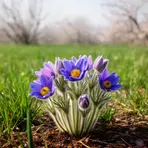
A short hairy plant with blue-violet or lilac flowers that blooms in early spring

A small plant with blue-violet or lilac flowers that blooms in early spring

A short, hairy plant that comes back every year and has blue-violet or lilac flowers in early spring

A short hairy plant with blue-violet or lilac flowers in early spring
Surface Forms
Morphology
Pulsatilla + patens
This is a scientific binomial (genus + species). A learner who knows 'Pulsatilla' will infer it refers to a type of pasqueflower (i.e., a plant species), but the species epithet 'patens' is Latin and not transparently informative to a B1 learner, so the precise descriptive meaning (short, hairy perennial with blue-violet flowers) cannot be derived. The taxonomic pattern is cross-linguistically familiar, giving partial predictability but not full compositional transparency.
Etymology
Pulsatilla patens comes from Latin words that describe the flower: one popular story says pulsatilla comes from a word meaning 'to shake' because the soft, hairy blooms seem to shake in the wind, and patens means 'open', pointing to its wide, open spring flowers, so the name helps you picture a low, furry plant with early, open blooms.

