

Eastern pasque flower
- noun
- US
- The Eastern pasque flower blooms in early spring, adding vibrant color to the landscape.
Examples
-
In North America, the Eastern pasque flower emerges from the snow to herald the arrival of spring.
-
She photographed an Eastern pasque flower covered in morning dew.
-
Botanists studied the habitat of the rare Eastern pasque flower in Siberian meadows.
-
The Eastern pasque flower blooms in early spring.
-
Have you seen the Eastern pasque flowers in the garden?
-
The Eastern pasque flower blooms in early spring, showcasing its stunning blue-violet petals.
-
She photographed a delicate Eastern pasque flower nestled in the grass after a light rain.
Synonyms

A short hairy plant with blue-violet or lilac flowers in early spring
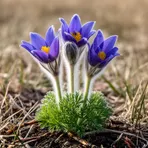
A short hairy plant that comes back each year with blue-violet spring flowers

A short, hairy plant from North America that lives more than one year and has blue-violet spring flowers

A short hairy plant with blue-violet or lilac flowers in early spring

A short hairy plant from North America and Siberia with blue-violet spring flowers
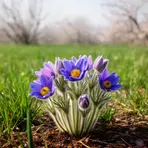
A short hairy plant with blue-violet or lilac flowers that blooms in early spring

A small wild plant with purple flowers in early spring

A small plant with blue-violet or lilac flowers that blooms in early spring
Surface Forms
Morphology
The phrase composes a clear location adjective ('eastern') with 'pasque' (an uncommon word historically meaning 'Easter') and 'flower' so a learner who knows the constituents would infer it denotes a flower associated with Easter/early spring found in eastern regions. However 'pasque' is rare/archaic and the full, species-specific botanical meaning (short, hairy perennial with blue-violet blooms) is not directly recoverable from the parts, so the relation is only partially predictable.
Etymology
Eastern pasque flower may come from the old word pasque meaning 'Easter', because this hairy wild flower appears in early spring at that time. So, Eastern shows where it grows and the whole name helps you remember it is a spring-blooming plant.

