
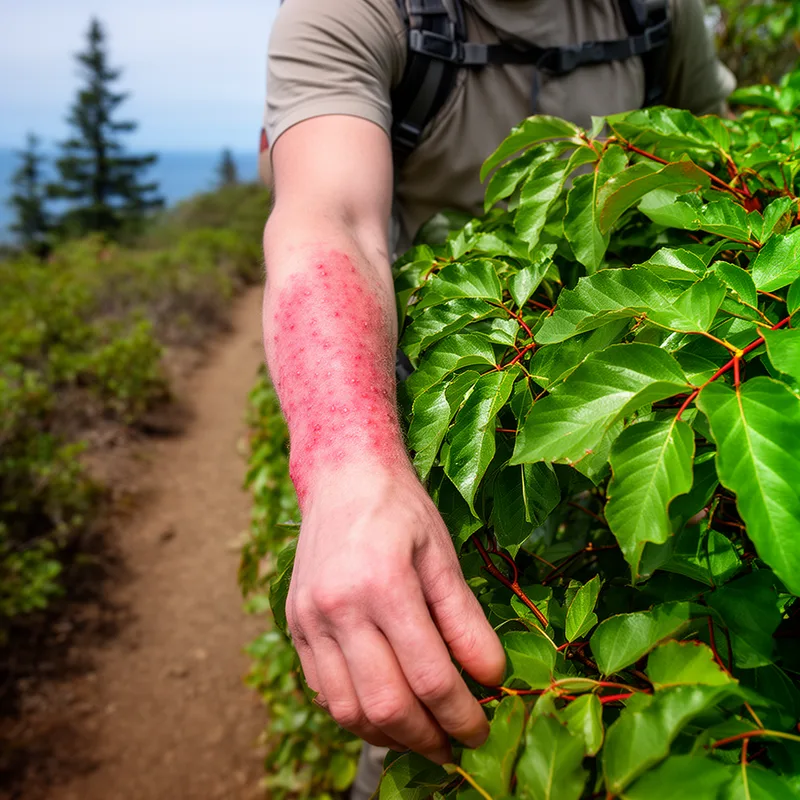
western poison oak
- noun
- /ˈwɛstərn ˈpɔɪzən oʊk/
- US
- I saw a western poison oak plant in the park.
Examples
-
After brushing against western poison oak, she developed an itchy, red rash on her arm.
-
Hikers are advised to avoid contact with western poison oak along the coastal trails.
-
The leaves of western poison oak resemble those of true oak but cause severe allergic reactions.
-
Do you know how to identify western poison oaks?
-
If you suspect you have come into contact with western poison oak, wash your skin immediately to prevent a rash.
-
Many hikers are warned to watch out for western poison oak while exploring the trails in California.
-
She developed a painful rash after brushing against western poison oak during her hike in the woods.
Synonyms

 3
6.5
3
6.5

A climbing or spreading plant with oak-like leaves that makes oil causing skin rash
A poisonous shrub on the Pacific coast of North America that causes an itchy rash when touched

A poisonous bush on the Pacific coast that causes a skin rash when touched
Surface Forms
Morphology
The noun phrase is compositional: 'poison oak' transparently denotes an oak/tree that causes poisoning/rashes, and 'western' simply specifies its geographic variety. This modifier + noun compounding is a common, cross-linguistically clear pattern, so a B1 learner who knows the constituent words will readily infer the meaning.
Etymology
Western poison oak is a plant name that tells you three things: western shows it grows on the west coast, poison warns it gives a skin 'rash', and oak says its leaves look like oak leaves. So the name helps you remember it is a poisonous bush that causes an itchy 'rash'.