

webbing clothes moth
- noun
- /ˈwɛbɪŋ kloʊðz mɔθ/
- The webbing clothes moth can cause serious damage to wool sweaters stored in closets.
Examples
-
Homeowners often discover holes in their garments after a webbing clothes moth infestation.
-
Regular cleaning and vacuuming help deter the webbing clothes moth from settling in your home.
-
The webbing clothes moth is often found in closets.
-
Many webbing clothes moths can damage your fabric.
-
Many homeowners notice that their clothes are damaged by a webbing clothes moth larvae feeding on the fabric.
-
To prevent a webbing clothes moth infestation, it's important to regularly clean and store clothes properly.
-
The presence of a webbing clothes moth in your wardrobe can lead to unsightly holes in your favorite garments.
Synonyms
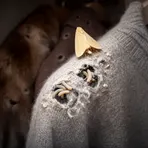
A small moth whose caterpillars eat and make holes in wool and fur
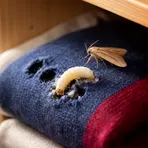
A small insect whose young eat wool and make holes in clothes
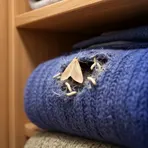
A small moth whose caterpillars eat wool and cloth made from animals
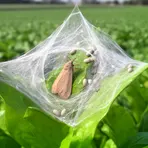
A small moth that makes silk shelters on plants to live and protect its eggs

A small moth whose young caterpillars live in little tubes and eat fabrics

A small moth whose larvae live in silk tubes and eat cloth made from natural fibers
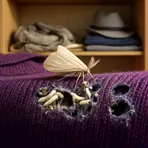
A small moth whose young eat wool and other fabrics
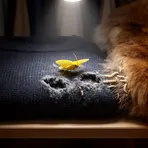
A small yellow moth whose caterpillars eat wool, fur, and other animal products
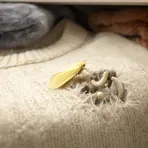
A small yellowish moth whose caterpillars eat wool, fur and other animal fibers

A group of small moths whose caterpillars eat natural fibers like wool and clothing

A small moth whose caterpillars eat carpets and other wool items

A small moth whose young eat wool carpets and make holes

A small moth whose young eat carpets and other wool items
Surface Forms
Morphology
The compound is partly compositional: a learner who knows 'clothes' and 'moth' can infer it is a kind of moth associated with clothing, but the modifier 'webbing' relies on a specific sense (spinning or producing web-like silk) rather than the provided sense of woven tape. Because the relevant sense of 'webbing' may be unfamiliar or ambiguous, the overall meaning is only partially predictable without prior exposure.
Etymology
Webbing clothes moth comes from the tiny caterpillars that make thin silk mats called webbing as they chew on wool and other fabrics and on clothes. So the name describes a small moth whose young spin webbing and can damage clothes.

