
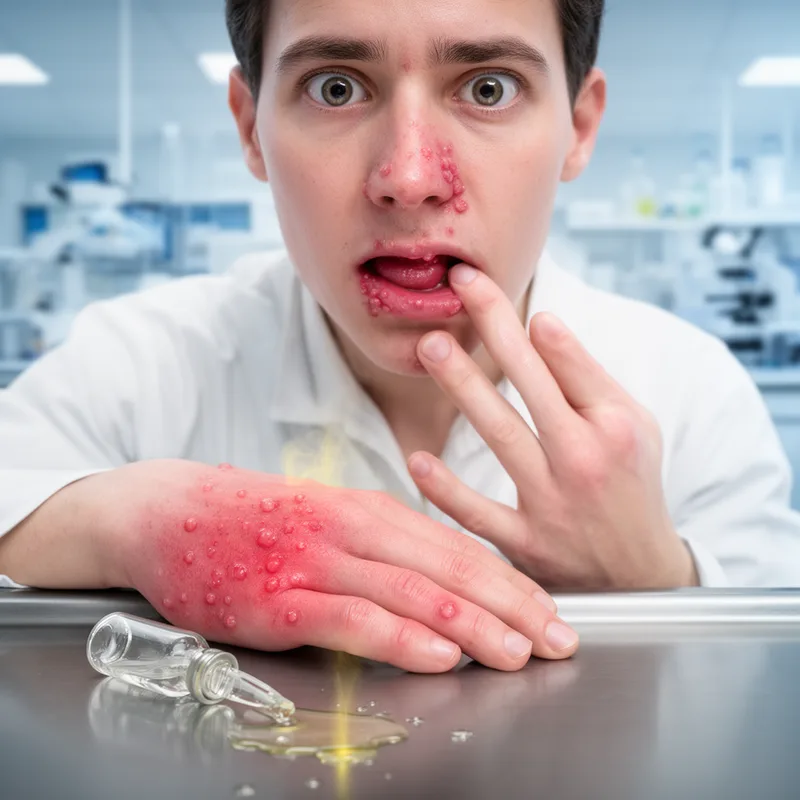
vesicant
- noun
- /ˈvɛsɪkənt/
- Specialized
- Mustard gas is a notorious vesicant used during World War I combat.
Examples
-
Healthcare professionals must handle vesicant drugs with extreme caution to prevent accidental injury.
-
A vesicant can cause severe burns.
-
Exposure to the vesicant caused severe blisters on the worker's hands and arms.
-
The chemical agent was identified as a potent vesicant.
-
The soldiers were trained to recognize the effects of vesicants like mustard gas during their combat preparations.
-
Exposure to vesicants can lead to severe skin blisters and respiratory issues.
-
After the chemical attack, the area was deemed unsafe due to the presence of vesicants in the air.
Synonyms
A chemical that causes blisters on the skin

A harmful chemical that causes severe blisters on skin and damages eyes and lungs, often used as a weapon
Surface Forms
Morphology
Etymology
Vesicant comes from the Latin word vesica meaning 'blister' or 'small bladder', and you can see the same root in vesicle. So a vesicant (noun) is a substance or chemical that makes blisters on the skin or inside the body.

