
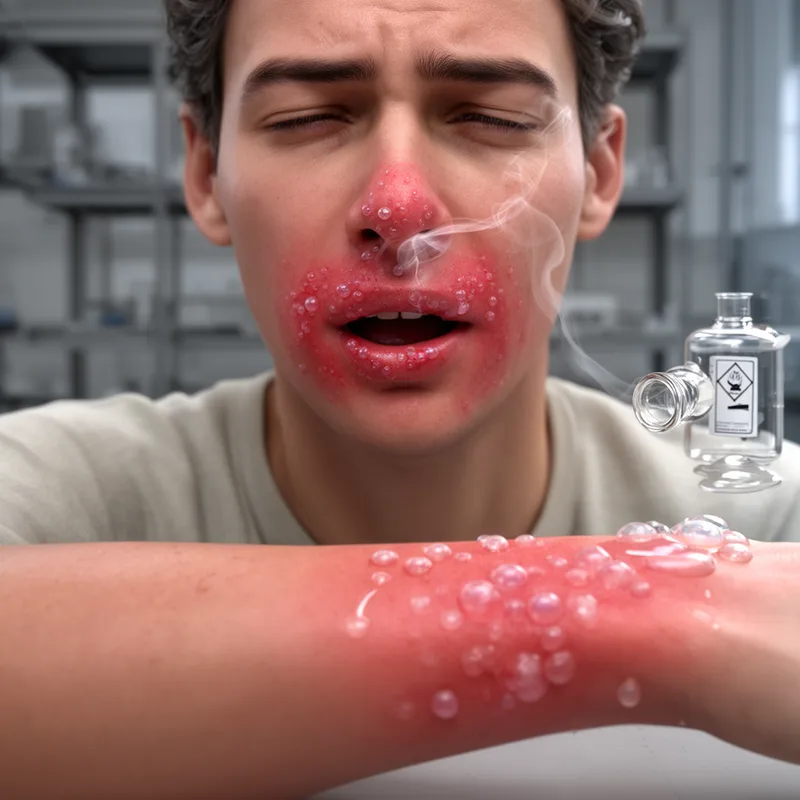
vesicant
- adjective
- /ˈvɛsɪkənt/
- Specialized
- Exposure to the vesicant chemical resulted in painful blisters on the worker's skin.
Examples
-
The dermatologist explained that contact with the vesicant plant could cause severe skin reactions.
-
The vesicant properties of mustard gas are well documented.
-
Certain mustard gases are known to act as vesicant agents during chemical warfare.
-
In chemistry class, we learned about vesicant agents.
-
Certain mustard gases are classified as vesicant agents due to their ability to cause blisters.
-
The firefighter warned that exposure to the vesicant chemical can lead to serious skin damage.
-
After working with chemicals in the lab, she developed blisters because of the vesicant substance.
Synonyms

Causing blisters on the skin
How Irritating
- Specialized

- Specialized
- Specialized
- Specialized
- Specialized
 1
7.5
1
7.5

Surface Forms
Morphology
Etymology
Vesicant comes from the Latin word vesica meaning 'blister' or 'small bladder', and it is the same root as vesicle. So a vesicant (adjective) describes something that makes blisters on the skin or inside the body.