
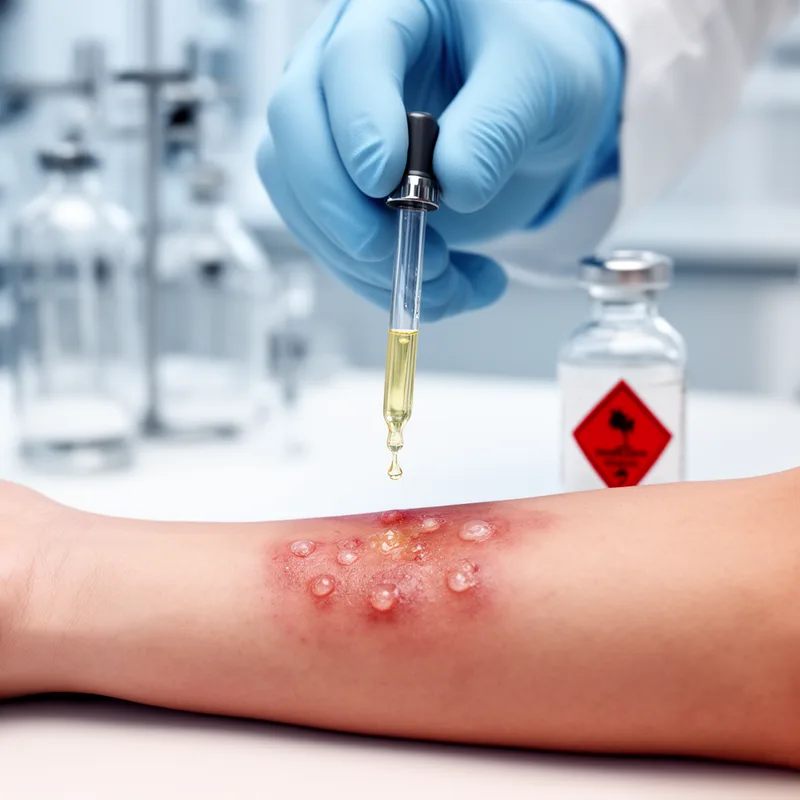
vesicatory
- noun
- /ˈvɛsɪkəˌtɔri/
- Specialized
- Doctors once used a vesicatory to treat certain skin conditions, but this practice is now outdated.
Examples
-
Mustard gas is a notorious vesicatory used in chemical warfare.
-
The laboratory handled the vesicatory with extreme caution due to its severe effects on the skin.
-
The doctor prescribed a vesicatory treatment for the patient's condition.
-
Some vesicatory agents can cause severe skin reactions.
-
Doctors once used a vesicatory to treat certain skin conditions, but this practice is now outdated.
-
The laboratory handled the vesicatory with extreme caution due to its severe effects on the skin.
-
Some vesicatory agents can cause severe skin reactions.
Synonyms

A substance that causes blisters on the skin and inside the mouth or nose
Surface Forms
Morphology
vesicatory = vesicant (semi-transparent) = vesic + atory
The relation between 'vesicant' (a blistering agent) and 'vesicatory' is direct and morphologically regular: the -atory adjectival/nominal formation conveys the same agentive/causative notion.
Etymology
Vesicatory comes from the Latin root vesica, which means 'blister' or 'bladder'. It is the same root as the English word vesicle, a small sac in the body, so a vesicatory as a noun is a substance that makes blisters on the skin.

