
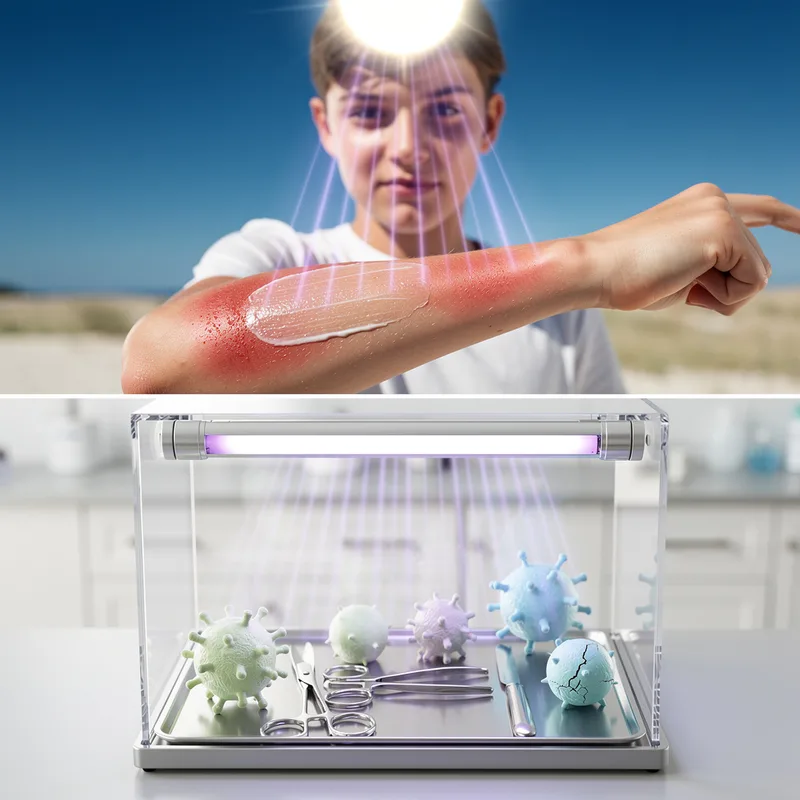
ultraviolet ray
 5
3.9
5
3.9

- noun
- /ˌʌltrəˈvaɪəlɪt reɪ/
- Specialized
- Ultraviolet rays can be extremely harmful to the human body when absorbed in excess.
- ultraviolet rays from the sun
- harmful ultraviolet rays
Examples
-
Although scientists are not yet sure, many believe that ultraviolet rays could have long-term effects on human health.
Academic text (2000) -
Ultraviolet rays can harm your skin if it is overexposed, causing lifelong damage.
Blog text (3) -
Protection from solar ultraviolet rays.
Academic text (2004) -
Slowly, but surely, ultraviolet rays would pour in, increasing the risk of skin cancer.
-
Slowly but surely, ultraviolet rays would pour in, increasing the risk of skin cancer.
Fiction book (1997) -
Tiny eye shields protected him from the ultraviolet rays.
Fiction book (1995) -
Thus, potentially dangerous amounts of ultraviolet rays are reaching the surface of our planet, adversely affecting all living things.
Blog text (22) -
Ozone in the upper atmosphere shields the planet and its inhabitants from harmful ultraviolet rays of the sun.
Academic text (1996) -
Ozone in the stratosphere, suspended 6 to 30 miles above the planet, beneficially shields the Earth from the harmful ultraviolet rays of the sun.
Academic text (2005) -
Unprotected exposure to the sun's ultraviolet rays is a major risk factor for skin cancer.
Synonyms
 10
4.0
10
4.0
A type of light from the sun that you cannot see and that can burn your skin
 4
4.1
4
4.1
Invisible light from the sun that can burn skin
Invisible light that can burn or damage skin

Invisible light beyond the violet end of visible light

A type of light, often ultraviolet, that can cause chemical changes
How Energetic
- Specialized
21
4.2

- Specialized
99
3.2
- Specialized
5
3.9
- Specialized
83
7.3
- Specialized
10
3.4
- Specialized

 1
4.4
1
4.4
- Specialized
55
3.7
Surface Forms
Morphology
The meaning is directly compositional: 'ultraviolet' (beyond violet wavelengths) modifies 'ray' (a beam or shaft of light), so a learner who knows both constituents can infer it refers to a beam of radiation beyond visible violet light. This adjective+noun pattern is regular and has clear cross-linguistic parallels, so the phrase is transparent to B1 learners who know the component words.
Etymology
Ultraviolet ray comes from a Latin word ultra meaning 'beyond' and the color violet, because these rays are just past the violet end of the light we can see. So ultraviolet rays means 'a kind of invisible light beyond violet that has more energy and can harm your skin'.