

thorny amaranth
- noun
- Specialized
- The thorny amaranth thrives in dry, sandy soils throughout tropical Africa and central Asia.
Examples
-
Farmers often remove thorny amaranth from their fields because of its sharp spines.
-
Researchers studied the medicinal properties of the thorny amaranth plant.
-
The thorny amaranth grows wild in many tropical regions.
-
Have you seen the thorny amaranth in the garden?
-
Farmers often remove thorny amaranth from their fields because of its sharp spines.
-
The thorny amaranth thrives in dry, sandy soils throughout tropical Africa and central Asia.
-
Researchers studied the medicinal properties of the thorny amaranth plant.
Synonyms
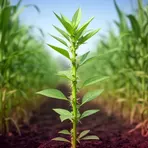
A plant that lives one year with spines where leaves meet the stem in tropical fields
Surface Forms
Morphology
The noun phrase is a straightforward adjective+noun composition: 'thorny' (covered with thorns) modifies 'amaranth' (a plant), so a learner who knows both words can infer it is an amaranth with thorns. This compositional pattern is regular in English (and common across languages), making the meaning predictable and transparent to a B1 learner.
Etymology
The name thorny amaranth is a picture word: amaranth is a plant and thorny shows it has small, sharp spines where the leaves meet the stem. So the name means 'a type of amaranth with thorns', which explains why farmers often remove it from their fields.

