

Amaranthus spinosus
- noun
- Specialized
- The spiny stems of Amaranthus spinosus distinguish it from other amaranths.
Examples
-
Amaranthus spinosus is often found growing as a weed in tropical crop fields.
-
Traditional medicines in parts of Africa use Amaranthus spinosus for various remedies.
-
The Amaranthus spinosus is often found in tropical regions.
-
Have you ever seen a Amaranthus spinosus plant?
-
Amaranthus spinosus commonly grows in disturbed areas and can often be seen amid cultivated crops.
-
Farmers often struggle with Amaranthus spinosus because it competes with their crops for resources.
-
Amaranthus spinosus is characterized by its distinctive spines that can be found along its stems.
Synonyms
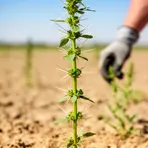
A plant that grows upright and lives one year with pairs of sharp spines at many leaf joints
Surface Forms
Morphology
Amaranthus + spinosus
The name is compositionally built: a genus name (Amaranthus) plus a descriptive epithet (spinosus, Latin for 'spiny/thorny'), so a learner who knows both constituents can infer it refers to a spiny Amaranthus plant. Scientific binomials routinely use this modifier pattern across languages, making the meaning directly derivable from the parts for anyone familiar with the constituent forms.
Etymology
Amaranthus spinosus comes from older words: Amaranthus means 'unfading' because its flowers seem to last and spinosus means 'spiny' because it has sharp points on the stems. So the name paints a simple picture of a long-lasting, spiny plant.

