
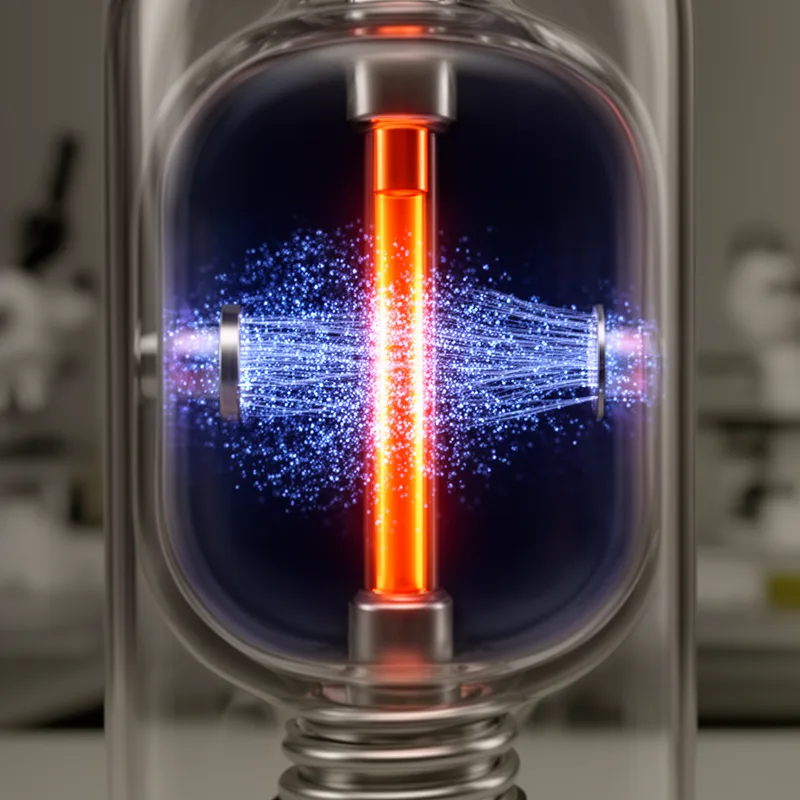
thermionic
 3
9.9
3
9.9

- adjective
- /ˌθɜrˈmiːɒnɪk/
- Specialized
- When heated to high temperatures, the thermionic effect can significantly increase electrical conductivity.
- thermionic radiation
Loading YouTube…
Watch on YouTubeI would remind you that Tommy Flowers decision with Max Human to build Colossus out of thermionic valve.
- I would remind you that Tommy Flowers decision with Max Human to build Colossus out of thermionic valve.
Examples
-
The scientist explained how thermionic materials release electrons when heated in a vacuum.
-
Who has seen a thermionic tube?
Blog text (22) -
Did you ever have a chance to read my paper on thermionic transconductance?
-
This would put 100 mA through the filament and should cause the thermionic emissions we need.
Blog text (28) -
We just need to test if the only thing missing here is the thermionic emission to make the display work, so the DC test is fine.
Blog text (28) -
Thermionic radio valves.
-
So this uses a a so-called thermionic cathode where there's a tungsten filament thinner that gets very hot.
-
It seems the radio has a dead heater driver for the cathode filament, which should be producing the thermionic emission of electrons needed to cause the fluorescent tracks to fluoresce.
Blog text (28) -
The thermionic emission is essential for the operation of vacuum tubes in electronic devices.
Compounds

- Specialized
An electric flow between two metal parts caused by heat making electrons leave one part
- Archaic
An electronic device in a sealed glass tube that controls electric current in old radios

- Archaic
A glass or metal device that controls the flow of electricity in old radios and machines

- Archaic
A glass or metal tube that uses heat to make electricity flow without air
Surface Forms
Morphology
Etymology
Thermionic starts with therm- meaning 'heat', the same root in thermal and thermometer, and includes ion, a word for a 'charged particle'. So thermionic literally means 'heat-caused particle', which explains why it describes electrons that come out of a hot source.