

thermionic vacuum tube
- noun
- /ˌθɜrˈmiːɒnɪk ˈvækjuːm tuːb/
- Archaic
- Early radios relied on the thermionic vacuum tube to amplify weak electrical signals.
Examples
-
Many audio enthusiasts believe that thermionic vacuum tubes produce a warmer sound than modern electronics.
-
The invention of the thermionic vacuum tube revolutionized long-distance telephone communication.
-
The thermionic vacuum tube is essential in many old radios.
-
Are thermionic vacuum tubes still used in modern electronics?
-
Early radios relied on the thermionic vacuum tube to amplify weak electrical signals.
-
Many audio enthusiasts believe that thermionic vacuum tubes produce a warmer sound than modern electronics.
-
The invention of the thermionic vacuum tube revolutionized long-distance telephone communication.
Synonyms

 65
8.8
65
8.8

An old glass part used in radios and sound equipment to make sound louder
 5
5.3
5
5.3
A glass or metal tube with empty space inside that controls electricity
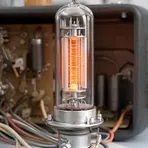
A glass or metal device that controls the flow of electricity in old radios and machines
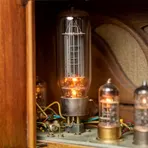
An electronic device in a sealed glass tube that controls electric current in old radios

A glass or metal device that controls electric current in old radios and televisions
Surface Forms
Morphology
thermionic + vacuum + tube
The term is fully compositional: 'thermionic' specifies the type of electron emission, and 'vacuum tube' denotes an evacuated electronic device, so together they mean a vacuum tube that operates by thermionic emission. Although technical, this modifier + noun combination follows regular English compounding patterns and would be understandable to a learner who knows the constituent words.
Etymology
Thermionic vacuum tube comes from its parts: thermionic means using 'heat' to push electrons out, vacuum means a space with 'no air', and tube is a sealed glass container. So the name describes a device where 'heat' makes 'electricity' flow inside an empty tube.