
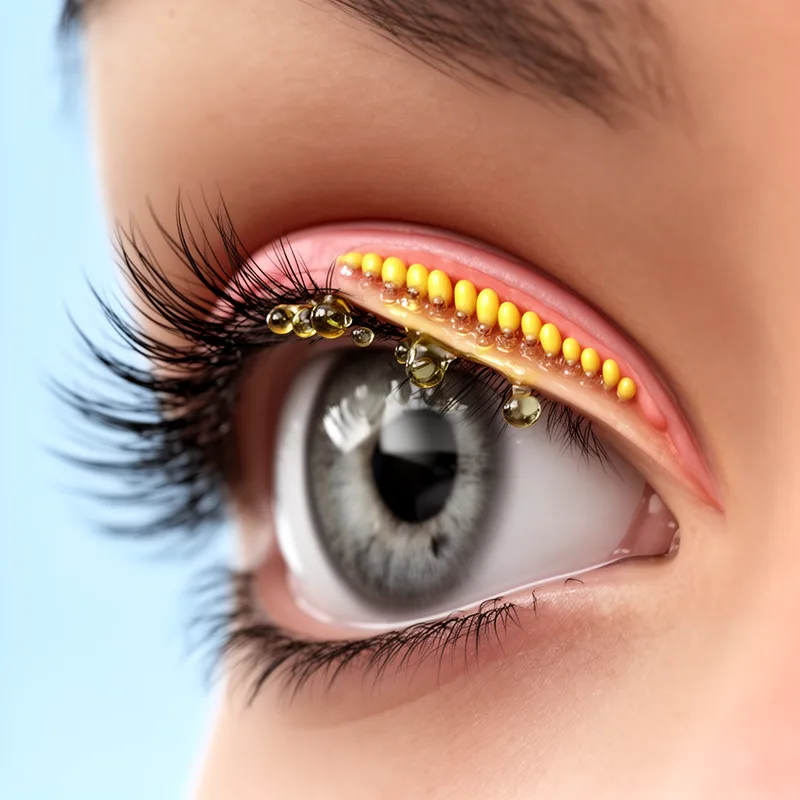
tarsal gland
- noun
- /ˈtɑrsl ɡlænd/
- Specialized
- The tarsal gland helps prevent the eyelids from sticking together by releasing an oily substance.
Examples
-
Doctors examined her tarsal glands after she complained of dry, irritated eyes.
-
A blockage of the tarsal gland can cause painful swelling in the eyelid.
-
The tarsal gland helps keep the eyes moist.
-
Many people are unaware of their tarsal glands.
-
A blockage of the tarsal gland can cause painful swelling in the eyelid.
-
The tarsal gland helps prevent the eyelids from sticking together by releasing an oily substance.
-
Doctors examined her tarsal glands after she complained of dry, irritated eyes.
Synonyms
 1
5.9
1
5.9

A small part under the skin that makes oil to keep hair and skin soft

 1
3.7
1
3.7
A small part of the skin that makes oil to keep skin and feathers waterproof
A small part inside the eyelid that makes oil to keep the surface of the eye wet
Surface Forms
Morphology
This is a straightforward adjective+noun composition: 'tarsal' (pertaining to the tarsus) + 'gland' (an organ that secretes fluids), so it denotes a gland located in the tarsal region. Such anatomical location-based formations are compositional and cross-linguistically regular, so a B1 learner who knows both constituents can infer the general meaning (a gland in the tarsal area), even if they might not know the precise oily/eyelid function.
Etymology
The term tarsal gland puts together tarsal, a word for the 'edge of the eyelid', and gland, a small part that makes liquid. This small gland makes an oily fluid that keeps the eyelids moving and the eyes from getting dry, so the name now means 'a long gland along the edge of the eyelid that makes oil'.