

sebaceous gland
 1
5.9
1
5.9

- noun
- /sɪˈbeɪʃəs ɡlænd/
- Specialized
- Excess oil production from the sebaceous glands can lead to acne outbreaks.
- sebaceous glands produce oil
- sebaceous glands in the skin
- sebaceous glands produce
Examples
-
Whether big or small, these dots are actually hair follicle openings that sit right on top of a sebaceous gland (the gland that produces your skin's oils).
Blog text (15) -
Sebum, produced by the sebaceous glands, contains both cholesterol and squalene.
Academic text (2018) -
It's a combination of oils from your sebaceous glands, dead skin and cells.
-
Pimples occur when the sebaceous glands in the skin become blocked.
Blog text (27) -
A dog's skin is made up of sebaceous glands that secrete a greasy substance.
Blog text (16) -
Blackheads appear due to the abundance of sebaceous glands combined with dust that clogs pores.
Blog text (7) -
Seborrheic dermatitis is a chronic inflammatory disorder that affects areas of the head and trunk where sebaceous glands are most prominent.
Blog text (10) -
The main culprit for the acne is the bacterium Propionibacterium acnes, which enters the sebaceous glands.
Blog text (27) -
The mechanism of acne formation involves the excessive secretion of oils from the sebaceous glands due to hormone overproduction, as well as the shedding of dead skin cells.
Academic text (2007) -
Sebaceous glands secrete an oily substance that helps keep the skin moisturized.
Synonyms

 1
3.7
1
3.7
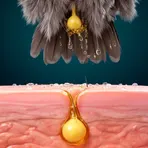
A small part of the skin that makes oil to keep skin and feathers waterproof

A small skin gland that makes oil and sends it into a hair follicle to protect hair
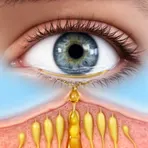
A small part inside the eyelid that makes oil to keep the surface of the eye wet

A small part at the edge of the eyelid that makes oil to keep the eyelids from sticking
Surface Forms
Morphology
The compound is a straightforward adjective + noun composition: 'sebaceous' (relating to oily/greasy substances) plus 'gland' (an organ that releases fluids) yields a gland that produces an oily substance. This compositional pattern is regular (and mirrored in many languages), so a learner who knows both constituent meanings can readily infer the MWE's meaning.
Etymology
Sebaceous gland comes from the old word sebum, meaning 'fat' or 'oil', because these tiny glands make an oily substance that keeps the skin and hair soft.