

oil gland


 1
3.7
1
3.7
- noun
- /ɔɪl ɡlænd/
- That's where our hair follicles, oil glands and sweat glands reside.
- oil glands in the skin
- stimulate the oil glands
Loading YouTube…
Watch on YouTubeThat's where our hair follicles, oil glands and sweat glands reside.
- That's where our hair follicles, oil glands and sweat glands reside.
- That's just because I have really deep oil glands.
- So what that means for me is that I have deep oil glands, larger pores, and I can clog up my pores more easily than someone that has had dry skin their whole life.
- Now it's even more important about understanding how poor blink rate plays a role in dry eyes is the effect on on your oil glands within the eye.
Examples
-
But those oil glands are basically more sensitive to the hormones.
-
The tiny oil glands in your skin make an oily liquid called sebum.
-
It's right where your oil glands are, and they've clogged up.
-
It makes your oil glands not be able to produce the the bad oil that clogs your skin and causes acne like the internal stuff.
-
That'll help buff out any sort of scaling or rough edges on the oil glands themselves.
-
So what that means for me is that I have deep oil glands, larger pores, and I can clog up my pores more easily than someone that has had dry skin their whole life.
-
The mites mostly reside on our faces, especially our noses where our paws and oil glands are larger.
-
Well, the issue is that within the eyelids there's specialized oil glands called the Mybomian glands.
-
Recently, several studies with this species showed that the production of essential oils was stimulated under moderate salinity, which could be due to a higher oil gland density and an increase in the absolute number of glands produced (Bernstein et al., 2010; Tarchoune et al., 2013).
Academic text (2015) -
As we age, the activity of our oil glands decreases, leading to drier skin.
Synonyms
 108
3.5
108
3.5
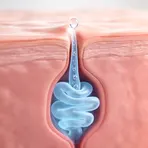
A body part that makes and releases chemicals like hormones into the blood or through small tubes
 1
5.9
1
5.9
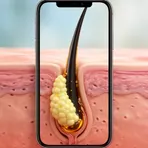
A small part under the skin that makes oil to keep hair and skin soft

A small part at the edge of the eyelid that makes oil to keep the eyelids from sticking

A small part near a bird's tail that makes oil birds use to clean and waterproof their feathers

An oil gland at the base of a bird's tail that birds use to spread oil on their feathers
How Oily

Surface Forms
Morphology
The compound is compositionally built from 'oil' (a slippery liquid) and 'gland' (an organ that secretes fluids), so the meaning 'a gland that secretes oil' is directly derivable from its parts. This noun–noun formation follows common productivity across languages and English, making it immediately understandable to a B1 learner who knows both constituents.
Etymology
Oil gland is a plain, literal name: oil is the substance it makes and gland is the small body part that produces it. The oil keeps skin or feathers smooth and 'waterproof', so the name explains the gland's job.