

uropygial gland
- noun
- /ˌjʊrəˈpɪdʒiəl ɡlænd/
- Specialized
- The uropygial gland helps birds keep their feathers waterproof.
Examples
-
If a bird's uropygial gland is damaged, it may struggle to maintain healthy feathers.
-
The uropygial gland produces a special oil that birds use for preening their feathers.
-
Some scientists study the uropygial gland to understand how birds keep their plumage waterproof.
-
Many birds have a uropygial gland at the base of their tail.
-
Birds use the oil from their uropygial gland to keep their feathers waterproof and clean.
-
The uropygial gland is essential for birds to maintain the health of their feathers.
-
When a bird preens, it spreads oil from its uropygial gland over its plumage.
Synonyms


 1
3.7
1
3.7
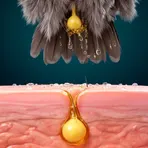
A small part of the skin that makes oil to keep skin and feathers waterproof

An oil gland at the base of a bird's tail that birds use to spread oil on their feathers
Surface Forms
Morphology
uropygial + gland
The headword contains a highly specialized adjective 'uropygial' (a technical, Greek-derived term referring to the tail/preen region) which a B1 learner would not be able to parse or map onto a concrete meaning; while 'gland' is transparent, the overall sense (the preen/oil gland at a bird's tail base) is technical and not compositionally derivable by an average learner. Because one constituent is obscure and the phrase is a specialist term rather than a predictable compound, it is not transparent to B1 learners.
Etymology
Uropygial gland comes from old parts uro- and -pygial, which mean 'tail' and 'near the tail', so the name points to a small gland at the base of a bird's tail. Birds use this gland to spread oil over their feathers to keep them clean and waterproof, which is why the name fits today.