

tarsal


 1
7.8
1
7.8
- adjective
- /ˈtɑrsl/
- Specialized
- To begin with, they are extreme leapers; indeed, they are named for an unusually long tarsal (ankle) bone that acts as their launcher.
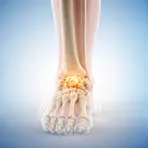
- tarsal bones
Examples
-
I expect you know about tarsal segments: the tiny hairs with clawlike structures that grip microscopic irregularities on an apparently smooth surface.
-
The word trachoma derives from the Greek word for rough swelling, referring to the follicles that appear on the tarsal conjunctiva.
Academic text (2013) -
The deformity is flexible, and there are no tarsal dislocations or subluxations.
Academic text (2005) -
The most notable abnormalities include a hypoplasia of the tarsal bones, with reduced size and shortening of the talus.
Academic text (2005) -
The dividing line that designates an infection as either pre- or postseptal is the orbital septum and the tarsal plate that is contiguous with the periosteum of the facial bone.
Academic text (2002) -
Medical morbidity, e.g., diabetes mellitus, chronic inflammatory disorders (RA); tarsal tunnel syndrome, spinal problems such as root entrapment.
Academic text (2002) -
We put some secretions from these glands on glass rods and found that ticks over a 24-hour period would remain on the secretions of the tarsal gland, which is halfway up the deer's leg.
Academic text (1996) -
The tarsal bones connect the ankle to the foot, providing essential support during walking.
-
She experienced pain in her tarsal area after an injury during the marathon.
-
Doctors often examine the tarsal region to diagnose foot-related issues effectively.
Compounds

- Specialized
A small part at the edge of the eyelid that makes oil to keep the eyelids from sticking
Surface Forms
Morphology
Etymology
Tarsal comes from the old Greek word tarsos, meaning 'flat of the foot' or 'ankle', so tarsal (as an adjective) describes anything that is about the tarsal bones or the ankle area of the foot.