
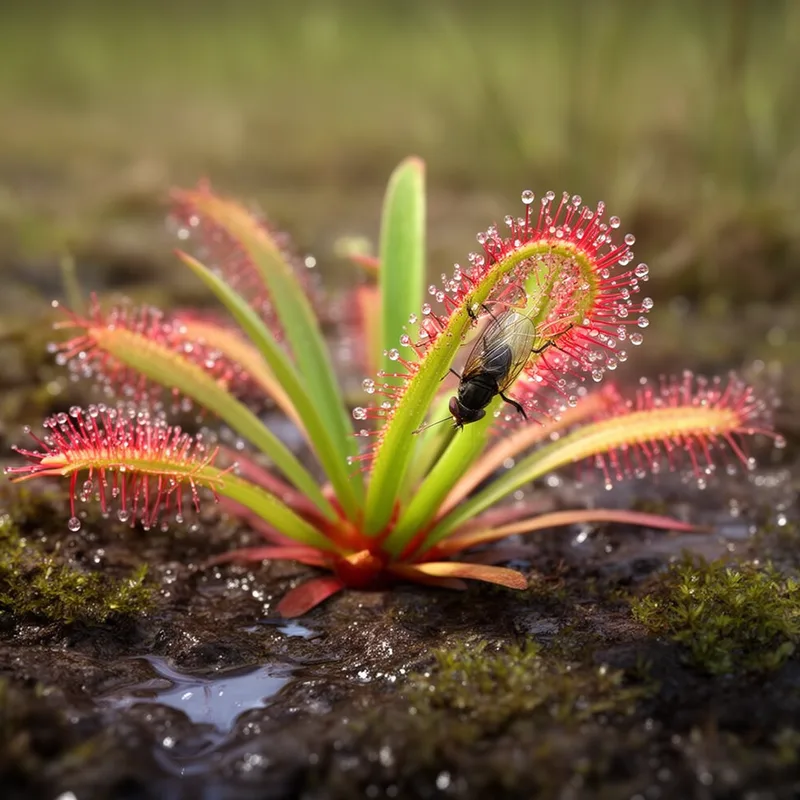
sundew plant
- noun
- /ˈsʌnˌduː plænt/
- Specialized
- The sundew plant thrives in wet, boggy areas.
Examples
-
In the wetlands, the sundew plant uses its hair-covered leaves to trap unsuspecting flies and other insects.
-
The sundew plant uses its sticky leaves to capture unsuspecting insects.
-
A sundew plant can curl its leaves around trapped prey to aid digestion.
-
In their natural habitat, sundew plants thrive in nutrient-poor boggy soils.
-
Many gardeners grow sundew plants for their unique features.
-
The gardener was amazed to find a sundew plant in his bog, with its sticky leaves capturing insects.
-
Students learned about the sundew plant and its unique ability to digest insects trapped on its sticky leaves.
Synonyms

 1
4.6
1
4.6

A plant that eats insects and small animals to get food


 1
9.9
1
9.9
A small plant that eats insects with sticky leaves, often found in wet places
A plant with sticky leaves that trap insects and feed on them

A small bog plant with leaves covered in sticky hairs that trap and eat insects
How Carnivorous

Surface Forms
Morphology
The phrase is fully compositional: 'sundew' names a particular insect‑catching organism and 'plant' marks its biological category, so the combined noun phrase simply identifies that kind of plant. A B1 learner who knows the constituent meanings can therefore derive the MWE's meaning; noun+category constructions like this are common and predictable across languages.
Etymology
Sundew plant comes from the bright sticky drops on its leaves that shine like dew in the sun. Those drops trap insects, so the name reminds us that the plant is 'insect-eating'.