
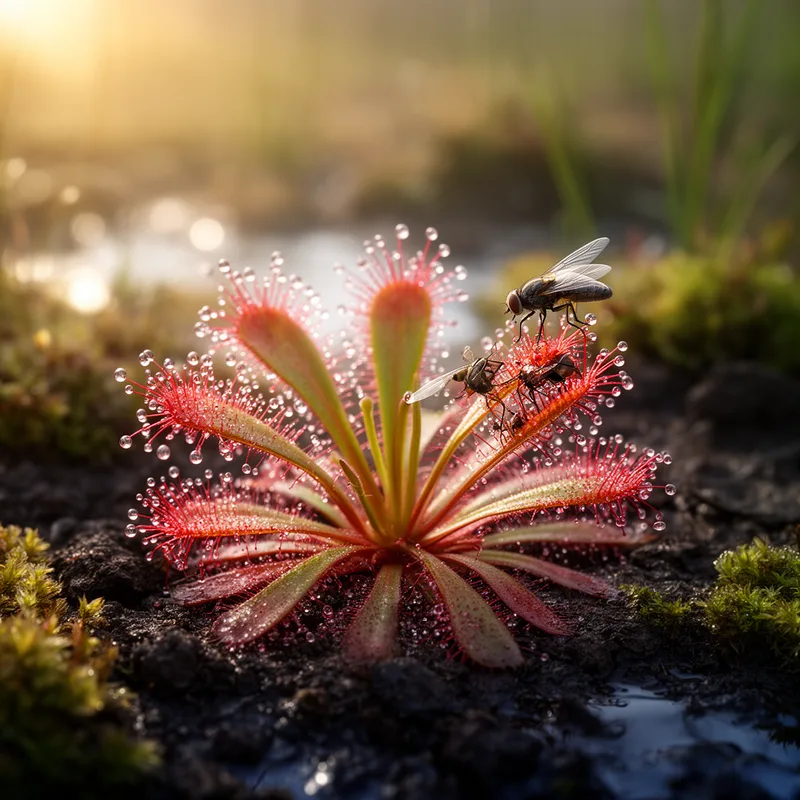
daily dew
- noun
- Specialized
 :
rocío diario
:
rocío diario
- The leaves of the daily dew glistened with sticky droplets in the morning sunlight.
Examples
-
Insect lovers are fascinated by the way daily dew traps its prey on its mucilaginous hairs.
-
Daily dew traps bugs!
-
During our nature walk, we found a rare species of daily dew seducing flies on the bog.
-
Daily dews thrive!
-
On our hike, we spotted a daily dew plant, its leaves shimmering with sticky hairs ready to catch insects.
-
The fascinating daily dew displays its ability to lure in and trap unsuspecting flies with its gooey secretions.
-
In the wetlands, the unique daily dew plant uses its hairy leaves to ensnare insects for nutrition.
Synonyms


 1
9.9
1
9.9
A small plant that eats insects with sticky leaves, often found in wet places

A small plant that grows in wet ground and has sticky leaves that catch and digest insects
A plant with sticky leaves that trap insects and feed on them
Surface Forms
Morphology
The meaning as a specific genus of insect‑eating bog plants cannot be derived from 'daily' (each day) and 'dew' (water droplets); a B1 learner would interpret the phrase literally as dew that occurs daily rather than a carnivorous plant. Although 'dew' has some conceptual link to sticky droplets, the combination with 'daily' does not transparently signal a plant name, so the overall sense is unpredictable without prior exposure.
Etymology
The noun daily dew comes from the plant's leaves, which are covered with sticky, shiny drops that look like morning dew and seem to appear daily. Those drops catch insects, so the name now means an 'insect-eating' bog plant.