

sundew


 1
9.9
1
9.9
- noun
- /ˈsʌnˌdu/
- Specialized
- Species associated with it include pitcher plants, sundews, and bladderworts.
- sundew and pitcher plants
Examples
-
Even sundew and pitcher plants can be found.
Academic text (1998) -
Bogs are home to a large number of carnivorous plant species, such as sundews, butterworts, bladderworts, and pitcher plants.
Academic text (2002) -
This is the same species of sundew that Darwin studied and wrote about and maybe half of his book on insectivorous plants.
-
The stimulus of the prey causes the sundew's tentacle cells to multiply, appearing suddenly longer as they stretch out and enfold the victim.
Academic text (2002) -
It supports a healthy sampling of the Coastal Plain's carnivorous species: three of the six pitcher plants, three of the six sundews, two of the six butterworts, and at least one of the thirteen bladderworts.
Academic text (2010) -
Bogbean, cinnamon fern, marsh cinquefoil, purple pitcher plant, round-leaved sundew, and several sedges cover most of the surface of the bog.
Academic text (2011) -
The glistening sheen of the sundew's oily, glandular hairs attracts insects and small animals (Figure 5).
Academic text (2002) -
The sundew traps insects with its sticky, glandular hairs to digest them for nutrients.
-
In the bog, the sundew's glistening leaves lure flies into its sticky grasp.
-
Observing the sundew, we noticed how effectively it caught small insects in its sticky traps.
Synonyms
 1
4.6
1
4.6
A plant that eats insects and small animals to get food

A small plant that grows in wet ground and has sticky leaves that catch and digest insects

A small bog plant with leaves covered in sticky hairs that trap and eat insects
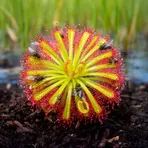
A plant with sticky leaves that trap insects and feed on them
Compounds

- Specialized
A small plant that grows in wet ground and has sticky leaves that catch and digest insects
How Carnivorous

Surface Forms
Morphology
Etymology
Sundew comes from the two simple parts sun and dew, meaning 'sun' and 'drops of water'. The plant has shiny, sticky drops on its leaves that look like dew in the sun and these drops catch insects, which is why it is called sundew.