

stink fly
- noun
- /stɪŋk flaɪ/
- US
- Farmers appreciate the stink fly because its larvae feed on crop pests.
Examples
-
The stink fly releases a strong odor to deter predators.
-
You can often find a stink fly near garden plants in the summer.
-
The stink fly is often found near decaying matter.
-
Did you see a stink fly in the garden?
-
The stink fly is helpful to farmers because its larvae consume harmful pests.
-
When threatened, the stink fly can emit a foul smell to ward off attackers.
-
During the summer, the stink fly is commonly spotted around flowering plants.
Synonyms

A small pale green insect whose young eat garden pests and that smells unpleasant

A small pale green insect with delicate lace-like wings that eats garden pests

A small green insect with thin wings and shiny gold eyes that eats garden pests
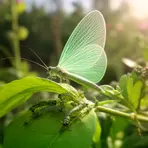
A small delicate insect with thin net-like wings whose young eat garden pests like aphids
How Smelly


Surface Forms
Morphology
The compound is directly compositional: 'stink' modifies 'fly' to denote a fly associated with a bad smell, so a B1 learner who knows both words can infer it refers to a smelly insect. Noun-noun modifier patterns like this are common and cross-linguistically transparent, making the overall meaning predictable from the parts.
Etymology
The name stink fly comes from the insect's strong, unpleasant smell and the fact it is a flying insect. The part stink shows the smell and fly shows it is an insect, and because its smell keeps animals that eat it away while its young eat garden pests, the name explains what the insect does today.