
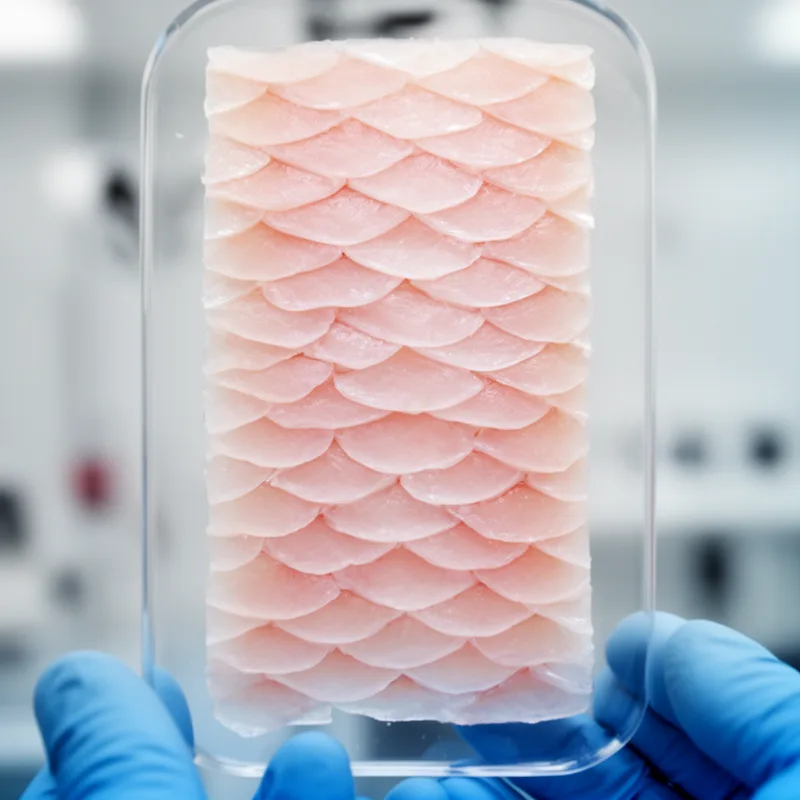
squamosa
- adjective
- /skwəˈmoʊsə/
- Specialized
- The squamosa portion of the temporal bone is thin and flat, resembling a scale.
Examples
-
The pathologist noted a squamosa pattern in the tissue sample, indicating a scale-like structure.
-
In some reptiles, the skin has a distinctly squamosa texture under the microscope.
-
The squamosa layer of the skin is crucial for protection.
-
In reptiles, the squamosa scales provide excellent camouflage.
-
The squamosa portion of the temporal bone is thin and flat, resembling a scale.
-
In some reptiles, the skin has a distinctly squamosa texture under the microscope.
-
The pathologist noted a squamosa pattern in the tissue sample, indicating a scale-like structure.
Synonyms
 1
8.5
1
8.5

Flat, thin cells that look like small scales in the skin
With small overlapping plates like fish scales

A plant or lichen surface covered with many small scales like tiny flat pieces
Covered with small overlapping hard plates like fish or armor

Relating to lizards and snakes or animals with scaly skin
Compounds

How Scaly

Surface Forms
Morphology
squamosa = squamose (semi-transparent) = squam + ose + a
Formally related to the English adjective 'squamose' but uses Latin inflectional/derivational endings (-ose, -a), making the relation somewhat technical rather than transparently productive for average learners.
Etymology
Squamosa comes from the Latin word squama, meaning 'scale', and the related Latin form squamosus, meaning 'scaly'. So squamosa means 'scale-like', which is why doctors and scientists use it for bones, skin, or tissues that look like flat scales.