
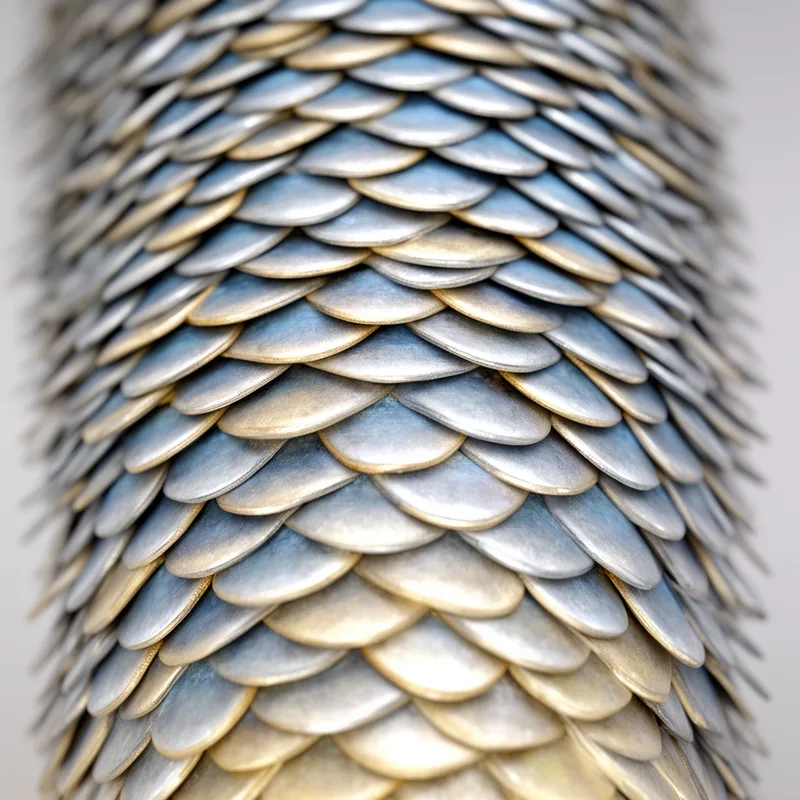
squamosal
- adjective
- /ˈskweɪməsl/
- Specialized
- Some fish species have a distinctly squamosal appearance due to their overlapping scales.
Examples
-
The fossil's squamosal surface suggested it was once covered in protective scales.
-
Some reptiles exhibit squamosal features that help with camouflage.
-
Scientists noted the squamosal texture on the lizard's skull during the examination.
-
The fish had a squamosal texture on its body.
-
Scientists noted the squamosal texture on the lizard's skull during the examination.
-
The fossil's squamosal surface suggested it was once covered in protective scales.
-
Some fish species have a distinctly squamosal appearance due to their overlapping scales.
Synonyms

 15
3.3
15
3.3

A surface with small, flat pieces like fish or reptile skin

 1
8.6
1
8.6
Covered in small, flat scales like a snake or fish
Having small flat parts that cover a fish or insect body

A surface or tissue that looks like fish scales

A plant or lichen surface covered with many small scales like tiny flat pieces

Relating to lizards and snakes or animals with scaly skin
How Scaly

Surface Forms
Morphology
squamosal = squamos + al
The word is built on the classical stem squamos- plus the common adjective suffix -al, but the stem is not a transparent or standalone English word for most learners.
Etymology
Squamosal comes from the Latin root squama, which means 'scale', like a fish's scale, so a helpful image is of small overlapping plates. So squamosal describes a surface that is 'scale-like' or covered in small plates.