
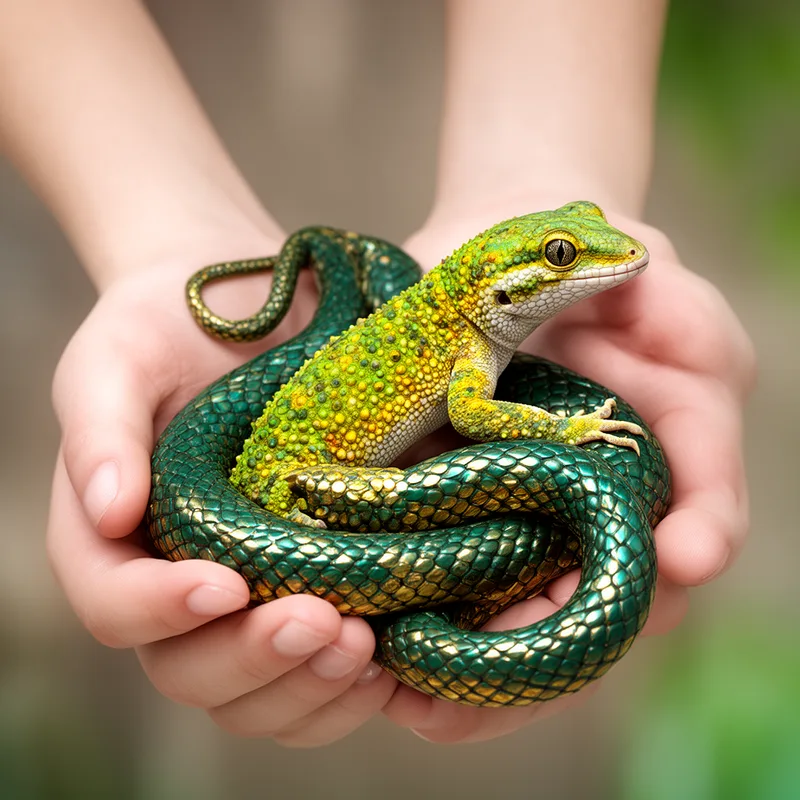
squamate
- adjective
- /ˈskwɑːmeɪt/
- Specialized
- Unlike amphibians, squamate animals have dry, scaly skin that helps prevent water loss.
Examples
-
Scientists study squamate fossils to learn about the evolution of lizards and snakes.
-
The gecko is a squamate reptile, easily identified by its scaly skin.
-
The squamate species in this area are fascinating.
-
Many squamate reptiles have unique adaptations.
-
The gecko is a squamate reptile, easily identified by its scaly skin.
-
Unlike amphibians, squamate animals have dry, scaly skin that helps prevent water loss.
-
Many squamate species exhibit fascinating adaptations to their environments.
Synonyms


 1
8.6
1
8.6
Covered in small, flat scales like a snake or fish

A plant or lichen surface covered with many small scales like tiny flat pieces
With small overlapping plates like fish scales

A surface or tissue that looks like fish scales
Surface Forms
Morphology
squamate = Squamata (opaque) = squam + ate
Formed from the taxonomic name Squamata/Latin combining form 'squam-' and the adjectival suffix '-ate', which is not transparent to general learners.
Etymology
Squamate comes from the Latin root squama, which means 'scale', like the English word 'scale' for fish or reptile plates. So when we describe an animal as squamate, we mean it has scaly skin, the feature that lizards and snakes share.