
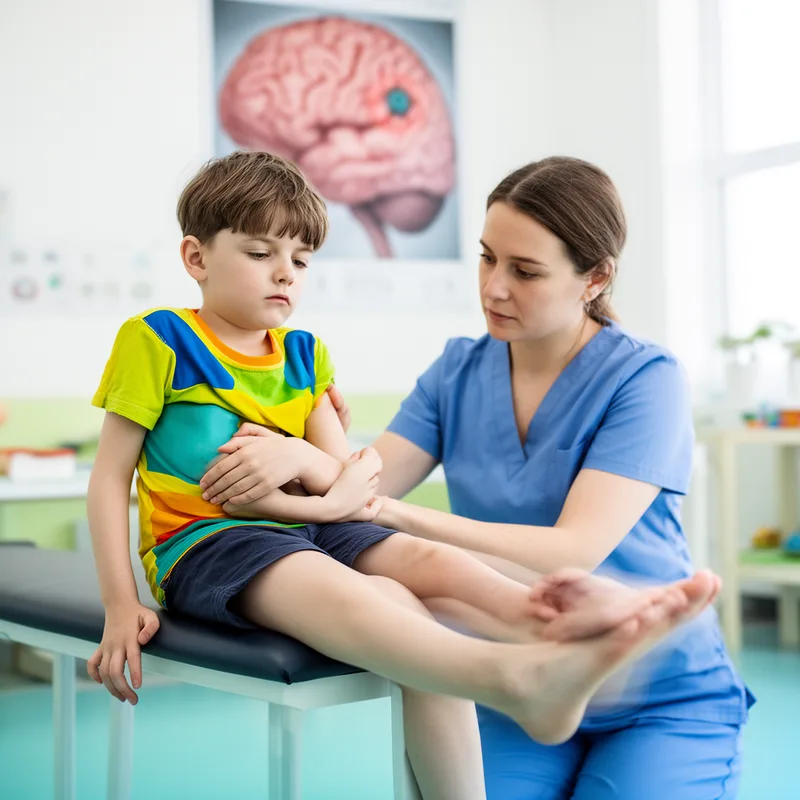
spastic paralysis
- noun
- /ˈspæstɪk pəˈrælɪsɪs/
- Specialized
- The child was diagnosed with spastic paralysis after showing persistent muscle stiffness and involuntary movements.
Examples
-
Physical therapy can help manage the symptoms of spastic paralysis in children.
-
The child was diagnosed with spastic paralysis at a young age.
-
Modern therapies aim to improve quality of life for patients with spastic paralysis.
-
Many children with spastic paralysis require physical therapy.
-
Modern therapies aim to improve quality of life for patients with spastic paralysis.
-
Physical therapy can help manage the symptoms of spastic paralysis in children.
-
The child was diagnosed with spastic paralysis after showing persistent muscle stiffness and involuntary movements.
Synonyms

 81
5.4
81
5.4

Loss of movement and feeling in all or part of the body
 30
8.4
30
8.4
A condition that makes part of the body weak or unable to move
 14
4.2
14
4.2
A long-term condition that limits movement and body position due to brain damage before or soon after birth
How Paralyzed
- Specialized
 81
5.4
81
5.4
- Specialized
133
1.4
Surface Forms
Morphology
Both constituents provide clear semantic contribution: 'spastic' denotes muscles prone to spasms or stiffness and 'paralysis' denotes loss of movement/sensation, so the compound straightforwardly refers to paralysis characterized by spastic muscle activity. Although it's a medical term, the meaning is compositionally predictable from the parts and would be understandable to a B1 learner who knows both words.
Etymology
Spastic paralysis combines spastic (from the word 'spasm', a sudden tight or jerking muscle) and paralysis ('loss of movement'). The picture is of muscles that are stiff or keep jerking so a person has trouble moving, which is why the term means paralysis with muscle spasms.