

spark counter
- noun
- /spɑrk ˈkaʊntər/
- Specialized
- The laboratory used a spark counter to detect radioactive particles.
Examples
-
When the spark counter registered a signal, the scientists recorded the event.
-
Early versions of the spark counter were crucial in the discovery of cosmic rays.
-
The spark counter detected radiation in the lab.
-
Can you explain how a spark counter works?
-
The laboratory used a spark counter to detect radioactive particles.
-
Early versions of the spark counter were crucial in the discovery of cosmic rays.
-
When the spark counter registered a signal, the scientists recorded the event.
Synonyms

 7
4.8
7
4.8

A device that detects and measures invisible radiation from radioactive materials


 1
9.0
1
9.0
A device that detects radiation using flashes of light
 1
7.5
1
7.5
A device that shows the paths of tiny invisible particles as thin white streaks in a mist
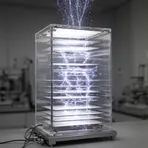
A device that makes sparks to show paths of tiny charged particles

A tube that detects radiation and gives an electrical signal showing how strong the radiation is

A device with a gas-filled tube that detects and measures radiation

A device that measures radiation by detecting tiny charged particles in a gas tube
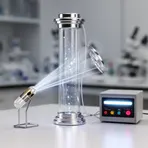
Device that measures radiation that makes charged particles by detecting those particles in a gas

A tool that shows the path of charged particles

A device that makes vapor tracks to show where tiny charged particles move
How Detailed
- Archaic
1
7.8

- Specialized
1
7.5
- Specialized
1
9.0
- Specialized
- Specialized
7
4.8
Surface Forms
Morphology
The compound 'spark counter' is directly interpretable as a 'counter' that registers 'sparks' — i.e., a device that counts tiny flashes or electric discharges. While the specific application to ionizing radiation is technical, a B1 learner who knows 'spark' and 'counter' can plausibly infer it is an instrument that counts sparks or discharges, so the meaning is compositionally transparent.
Etymology
Spark counter comes from early detectors that made a tiny flash or spark each time a particle passed, and the machine 'counted' those flashes. So the name literally describes a device that 'counts' small sparks to show when radiation or particles are present.