
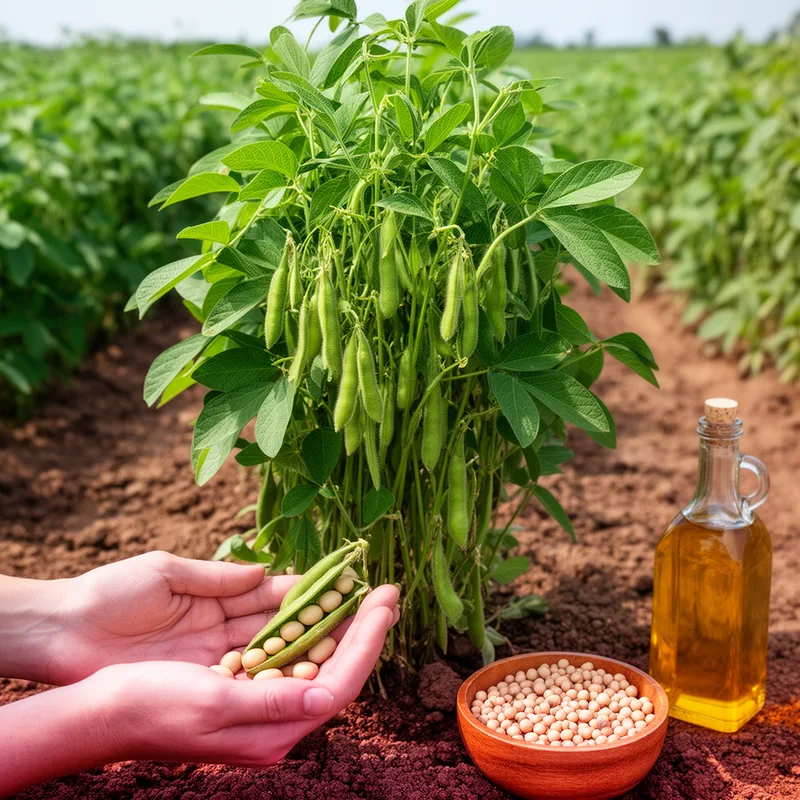
soja bean
- noun
- /ˈsoʊdʒə biːn/
- UK
- In Asia, soja beans are used to make tofu and soy milk.
Examples
-
The farmer planted soja beans to improve the soil and boost his annual harvest.
-
Research into soja bean genetics has led to more resilient crop varieties.
-
Many vegetarian dishes use soja bean products as a primary source of protein.
-
The soja bean is a versatile crop.
-
She prefers soja beans over other legumes.
-
Vegetarians often include soja beans in their diets because they are high in protein.
-
The soja bean is a key ingredient in many meat alternatives sold in stores.
Synonyms

 512
1.0
512
1.0

An edible seed or pod from plants like peas and lentils used for food
 68
1.2
68
1.2
A plant that produces edible seeds used for food, oil, and animal feed
 57
1.8
57
1.8
A plant grown for its beans used to make food, animal feed, and oil
 1
2.3
1
2.3
A bushy plant that makes beans used for food and oil


 1
1.4
1
1.4
A plant that produces beans you can eat

A plant with seeds used to make food, oil, and animal feed

A plant also called soybean that is grown for edible seeds used for food and oil

A plant that makes beans used for food and oil

A bushy plant that makes oil-rich seeds used for food and animal feed
A plant that farmers grow for its edible bean seeds rather than its pod
Surface Forms
Morphology
The meaning is directly compositional: 'soja' (a food/soil-improving plant) combined with 'bean' (an edible seed) yields a specific kind of bean (soybean). This noun+noun type-denoting construction is cross-linguistically common and follows straightforward English compounding, so a B1 learner who knows the constituents can infer the meaning.
Etymology
Soja bean probably comes from Asian words for 'soy', because people in Asia used the soja bean long ago to make soy foods and sauces. That's why soja bean today means the edible bean used for oil and protein.