

snakefly
- noun
- /ˈsneɪkˌflaɪ/
- US
- The snakefly uses its elongated neck to attack smaller insects.
Examples
-
Some gardeners welcome the presence of snakeflies because they help control pests.
-
Researchers discovered a rare snakefly species in the forest last summer.
-
A snakefly can often be found near streams.
-
The snakefly is known for its unique appearance.
-
Gardeners appreciate how a snakefly helps manage pests in their gardens.
-
The long neck of the snakefly allows it to reach and capture insects efficiently.
-
During field studies, researchers observed a snakefly hunting its prey along the forest floor.
Synonyms
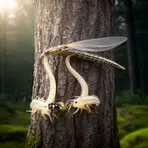
A family of insects like snakeflies with a long neck and young that eat other insects
How Long-Necked


Surface Forms
Morphology
Etymology
Snakefly is a simple combination of snake and fly. People named it this because its long, necklike front makes it look a little like a tiny snake, so the name helps you remember it is a fly with a 'snake-like' neck that hunts other insects.