

to sliver
 3
5.1
3
5.1

- verb
- /ˈslɪvər/
- Or 1/2 cup slivered almonds and 1 vanilla bean for almond extract.
- slivered almonds
- slivered onions
- slivered garlic
Examples
-
She carefully slivered the garlic before adding it to the pan.
-
She picks the slivered almonds from the top.
Fiction book (1997) -
I am gonna slice it off, sliver by sliver, with an electric meat slicer.
-
Use the Cuisinart slicing blade to sliver.
Blog text (1) -
3 tablespoons slivered or sliced almonds, toasted
Blog text (4) -
She nibbled pieces of slivered carrots and almonds with her fingers, thinking.
Fiction book (1993) -
She steamed two packages of chicken-flavored rice with slivered carrots and broccoli.
Blog text (29) -
I've done similar and added toasted salted walnuts, mandarin orange slices, and slivered jalapenos.
Blog text (4) -
She reached the bottom of the stairs carrying a large silver tray with an angel food cake coated in creamy pink peaks of whipped cream, sprinkled with slivered almonds.
Fiction book (2001) -
I will sliver the carrots into thin strips for the salad.
Synonyms
 203
1.0
203
1.0
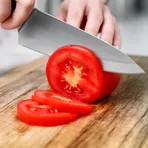
To cut something into thin flat pieces with a knife
 104
2.3
104
2.3
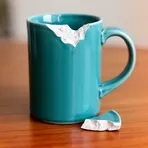
To break off a small piece of an object
 89
2.3
89
2.3
To make something into smaller pieces using a knife or tool
 56
1.9
56
1.9
To cut something into smaller pieces by sharp blows again and again with a knife or axe
 39
3.7
39
3.7
To break into small pieces or make something break apart
 39
2.7
39
2.7
To rip something into small pieces
 32
1.1
32
1.1
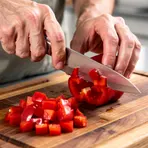
Make something into smaller pieces using scissors or a knife
 21
3.9
21
3.9
To break into many small, sharp pieces like wood or glass
 9
1.5
9
1.5
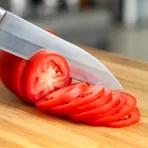
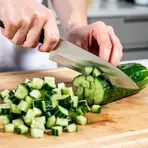
To cut something into thin slices
 8
8.0
8
8.0
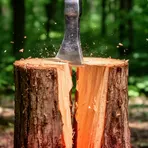
To cut something in two using a sharp tool like an axe
 8
5.4
8
5.4
Break something into many small parts or hurt someone very badly
 5
4.2
5
4.2
Cut lengthwise along the grain, as in wood
 3
3.2
3
3.2
Break a small piece from something by hitting or pressing it
 3
3.9
3
3.9
To come off a surface in small thin pieces
 1
6.3
1
6.3
To split something into two parts by force, like lightning or an axe


 1
9.7
1
9.7
To break off in small pieces from stone or concrete

To break something into many small pieces
Antonyms

How Thin

Surface Forms
Etymology
Sliver originally described the action of breaking or splitting into narrow strips, like when wood or glass breaks into thin bits. So, to sliver something is to split or cut it into thin, narrow pieces.