
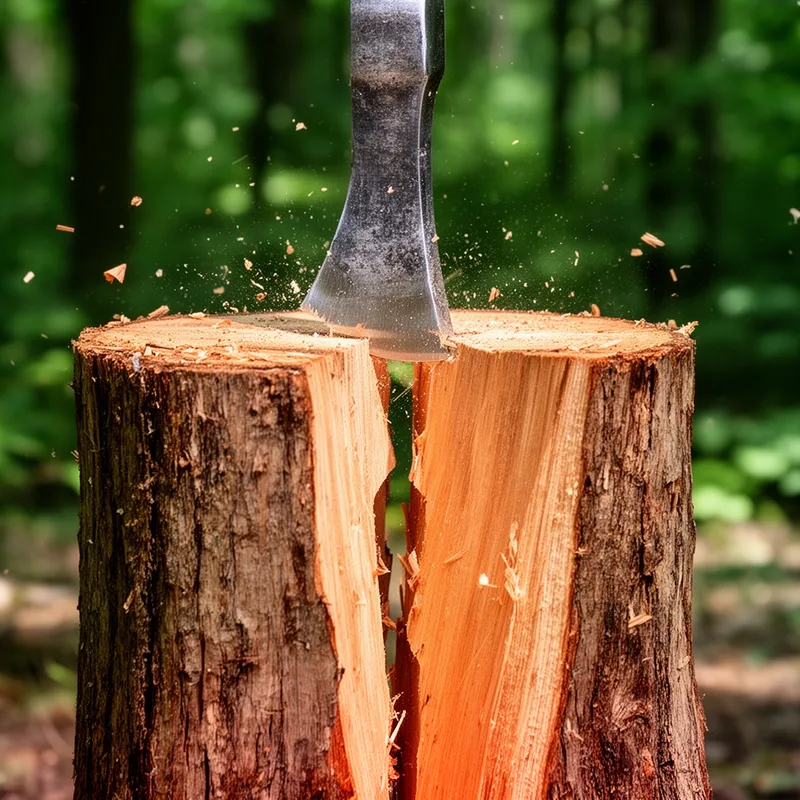
to cleave
 8
8.0
8
8.0

- verb
- /kliv/
- She needed to cleave the log in half to create firewood for the winter.
- cleave the HA protein
Loading YouTube…
Watch on YouTubeIt's microglia that cleave off neuronal synaptic connections.
- It's microglia that cleave off neuronal synaptic connections.
- The guy I worked with had a one of those big cowboy belt buckles that have been cleaved in half right down the middle by an ostrich.
- We know of nowhere to go with it and we can't cleave off a carbon because now we're just going to exacerbate the acid increase.
Examples
-
It's microglia that cleave off neuronal synaptic connections.
-
The chef used a sharp knife to cleave the meat into perfectly sized portions.
-
Chris uses the machete to cleave into the tunnel's upper support beam.
Fiction book (2002) -
You're all thinking, OK, we need to cleave double stranded DNA.
-
Protease cleaves longer proteins into smaller core proteins.
-
They toiled with a pick and a crowbar and a drill to cleave a breech.
-
With one precise swing, he managed to cleave the thick branch off the tree.
Synonyms
 513
1.3
513
1.3
To break something into two or more parts
 193
1.0
193
1.0
To cut something into pieces using a sharp tool like a knife or axe
 100
5.6
100
5.6
To cut something completely away from a larger thing with a knife or tool
 89
2.3
89
2.3
To make something into smaller pieces using a knife or tool
 53
3.0
53
3.0
To cut forcefully with a knife or sharp tool
 53
1.5
53
1.5
Cut meat into slices for serving
 10
4.1
10
4.1
Cut or move quickly and smoothly through air and water
 9
9.0
9
9.0
To divide something into parts, often breaking a company or country
 9
7.5
9
7.5
To cut or tear skin roughly
 9
4.6
9
4.6
To cut a part from something with one quick move
 1
6.3
1
6.3
To split something into two parts by force, like lightning or an axe
To split something violently with a sharp tool

To tear something into separate parts, usually by force
Antonyms


How Forceful

Surface Forms
Etymology
Cleave, in the sense 'to split', comes from an old word that meant 'to split' and you can see the same idea in cleaver the heavy knife and cleft the word for a split. So to cleave something is to cut or break it apart.